History
Located in the eastern part of the Santuario de Nuestra Señora de la Encarnación. It is situated behind a Baroque plaster altarpiece, which replaces the previous wooden one (probably from the last third of the 17th century), itself built over an earlier one, whose paintings appear on the sides of the current one.
In 1787, Don Ignacio Echenique, parish priest of the Asunción, replied to Tomás López that a sumptuous shrine was being concluded, replacing the previous stone chapel. For its access, the Sanctuary was also expanded towards the southeast, building a corridor whose entrance is found under the Gothic vault, and beneath which, given the unevenness of the terrain, new dependencies are located (former dwelling of the caretakers).
The shrine has a square plan, with corners highlighted at an angle to transition to the hemispherical dome: semi-circular fluted Doric columns stand out on pedestals, and in the central hollow, a concave pilaster of greyish-green colour, decorated with garlands and rocaille motifs in gilded plaster.
The walls are decorated with oil painting creating a fabric effect, and the plinth with false marbling in red (repainted in green before the restoration). The openings of each wall are arranged as follows:
- West: opening to the altarpiece and high altar.
- East: doors opening to the barred window of the exterior.
- North: doors opening to a cupboard.
- South: access doors to the shrine, nowadays normally open due to the installation of a metal gate in the year 2000.
If we proceed upwards, the next body is formed by the lunettes and pendentives, which support the dome. Three of the lunettes (the fourth corresponds to the mouth of the altarpiece) feature gilded rocailles housing canvases representing scenes from the life of Christ. They are of landscape rectangular format, measuring 157 x 87.5 cm, and date from the 18th century.
- The one on the east wall, behind the Cristo de la Antigua, presents Jesus on the road to Calvary. Simon of Cyrene helps him carry the cross, while Mary Magdalene kneels before him and the Virgin Mary contemplates the scene behind her.
- The canvas on the north wall corresponds to the scene of the Crowning with Thorns, with Romans mocking Jesus in the praetorium.
- On the south wall, over the entrance to the shrine, is located a canvas of greater iconographic complexity, related to the episode of the Temptations of Christ. As recounted in Matthew chap. 4 verse 11: "Then the devil leaveth him, and, behold, angels came and ministered unto him." Thus, they serve him food at a table, while another fills water from a fountain. Behind him among the trees appears Satan, and at the foot of the table a grey heron (according to restorers), symbol of penance and repentance, or a pelican, which symbolizes Christ's sacrifice on the cross and the Eucharist, due to the ancient belief that this bird loved its chicks so much that it fed them with its own blood, pecking open its chest.
The four pendentives, which spring from a piece of broken entablature, feature four oval canvases framed in gilded plaster rocailles. These measure 87 x 63 cm and are possibly by the same author as the rectangular ones. Each shows an evangelist accompanied by his tetramorph:
- NW Corner, Matthew and the man, here represented as a child, as his gospel is characterized by emphasizing the life of Christ as a man (it begins with his genealogy), and less on his divine facet. We do not see the inside of the book.
- NE Corner, Luke and the bull/ox. There are several positions on this: that it symbolizes the sentiment of his Gospel, as they have a strong heart, or that it is a symbol of Christ's sacrifice through his Passion.
- SW Corner, Mark and the lion. This animal symbolizes strength, and his gospel shows the will of Christ. As it begins with the preaching of Saint John the Baptist, the voice crying in the wilderness, it can be compared to the roar of a lion.
- SE Corner, John and the eagle, due to the loftiness of his gospel, full of mysticism.
Next, the drum and the dome are superimposed on this body, one of the most representative elements of the building's exterior, with the Levantine air granted by the blue glazed tiles of its eight-sided roof. Twelve windows provide light to the interior of the shrine (except for the two facing the wall and roof of the temple). The dome rests on a drum supported by pendentives. Between each window, a Solomonic column alternates with a fluted one, all decorated with motifs in corlada silver (varnished silver); the wall backgrounds are decorated with oil painting creating a fabric effect. As on the exterior, the decoration is repeated using dentil mouldings and vegetal forms, here in gold. The dome consists of twelve gores measuring approx. 2.80 x 1.20 metres, executed in oil and corlada silver on linen fabric. Each of the twelve gores, in addition to vegetal decoration, possesses a distinctive element based on symbols alluding to the Passion of Christ: the "Arma Christi".
Another prominent element of this shrine is its pavement of Majolica tiles of 21 x 21 cm (Valencian span), polychrome painted by hand on a tin-white base, with stenciling technique. Made to order, as deduced from its perfect fit to the room, it combines two styles: on the one hand, Classicism (acanthus, architectural ruins, symmetry...); on the other, Rococo (sports hunting scenes, clothing, bouquets of flowers...). It was manufactured in Valencia, between 1785 and 1790, probably in the factory on Calle Mosén Femares or the one on Calle de las Barcas. It presents four scenes arranged on each side of the shrine: hunting scene, scene of the Siege of Gibraltar, fishing scene, and maritime mercantile scene. The first represents the hunting of the deer and the hare. The second, the attempt to recover the Rock of Gibraltar by the Spanish Army around 1783. The third is a port landscape where a sailor appears smoking a pipe while pointing to some goods. Finally, the maritime mercantile scene represents a port with large infrastructure. Much of the theme highlights the role of maritime trade in the economy of the late 18th century and represents, within the shrine, "the earthly," opposite the heaven represented in the dome. The image of the Cristo de la Antigua has the function of a link between Heaven (dome) and Earth (pavement).
The current image of the Cristo de la Antigua, patron of Tobarra, replaced the previous one, destroyed in 1936, and arrived in Tobarra in 1941. The author's name is unknown, although from testimonies it is known that it arrived from Valencia, so it could have been Roberto Roca or Díes López, who received several commissions from Tobarra at that time. The throne and the Cross are the work of local cabinetmaker Manuel Andrés Rubio "El Caja", in 1941, under the supervision of priest D. Rafael Pastor Cantó. The four angels of the throne are the work of Valencian sculptor José Díes López and were made around 1952, when said author created the new sculptural group of the Virgen de la Encarnación.
Images
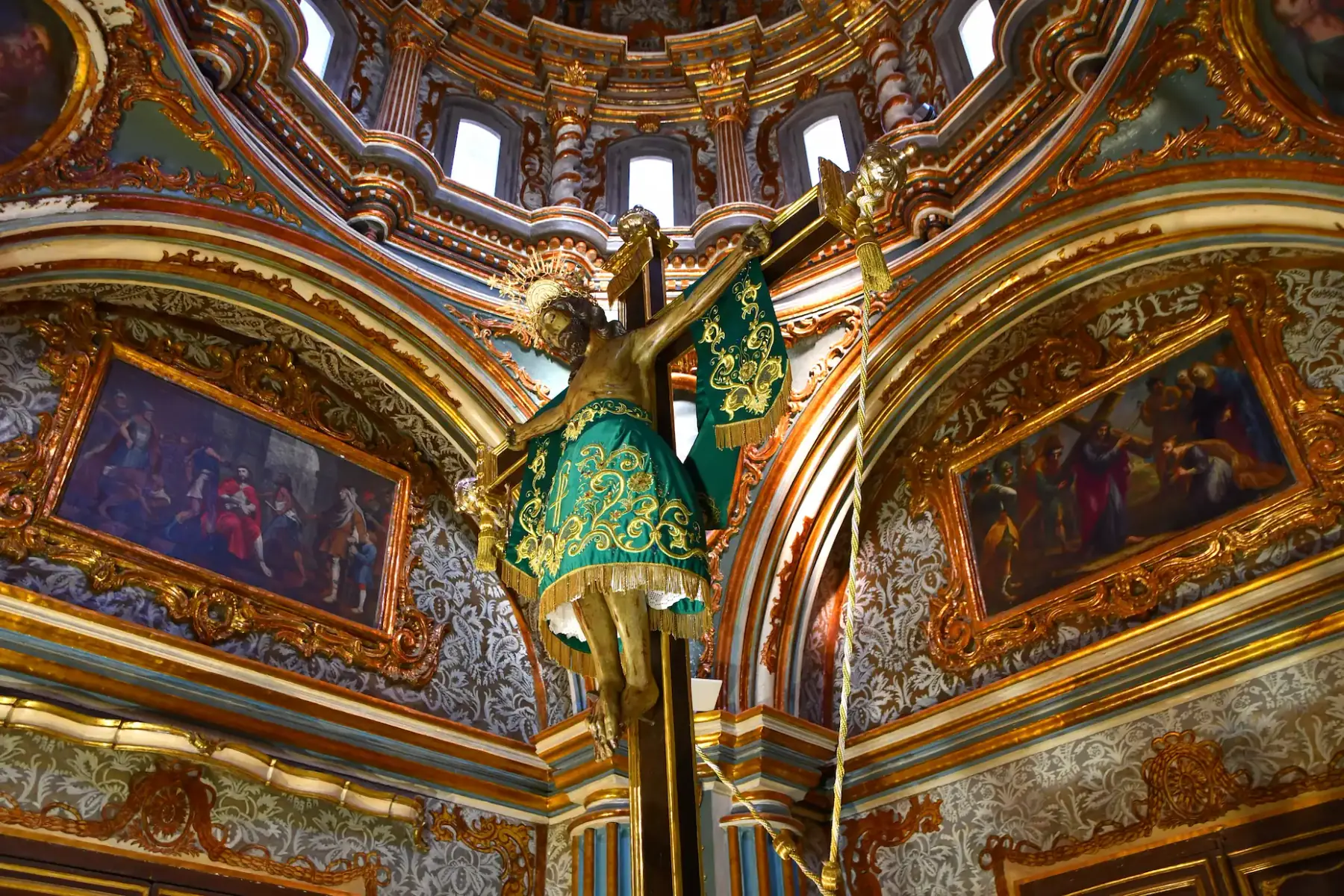
The Shrine of the Cristo de la Antigua
Photo: Elena Lisón Sánchez
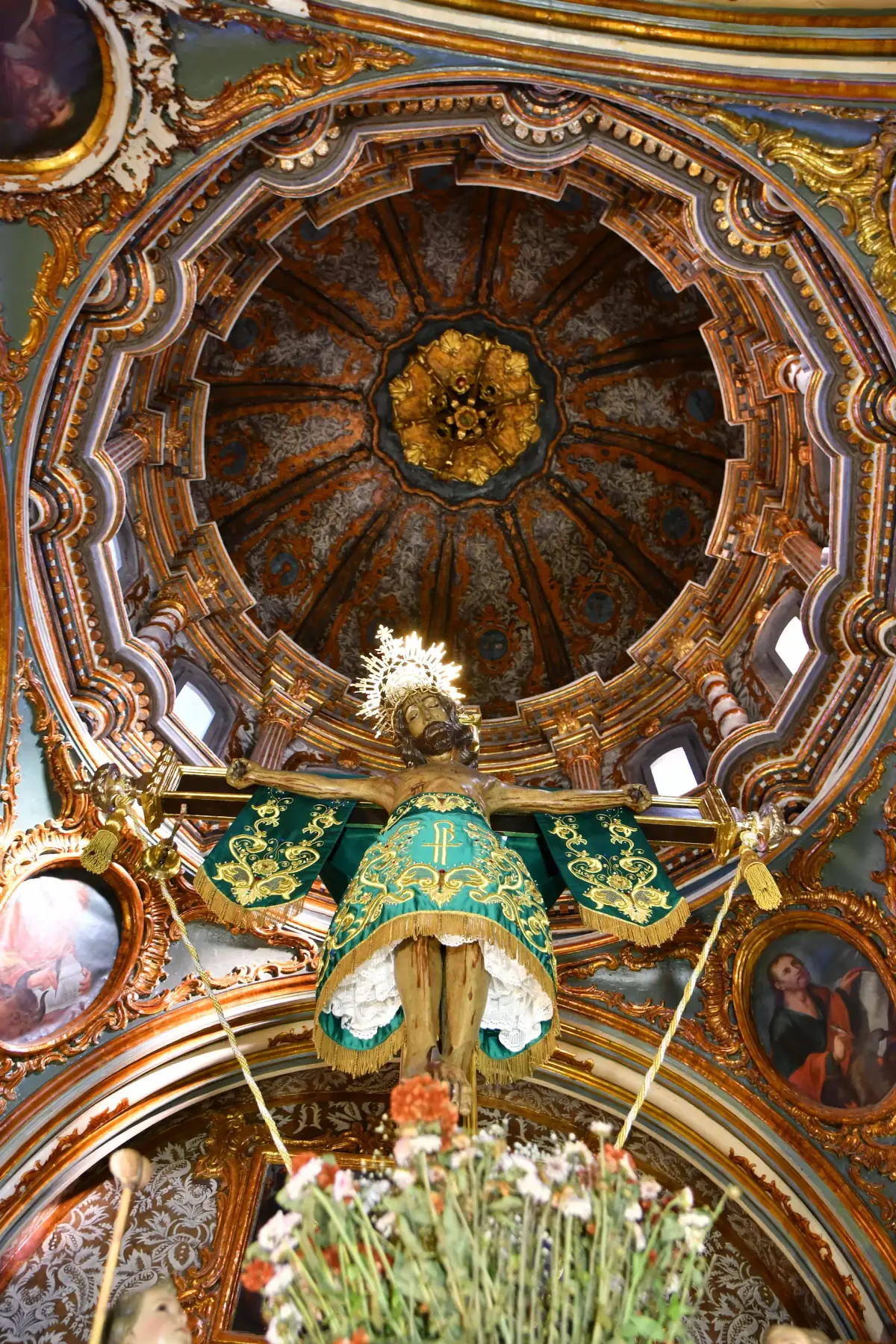
Cúpula del camarín
Photo: Elena Lisón Sánchez
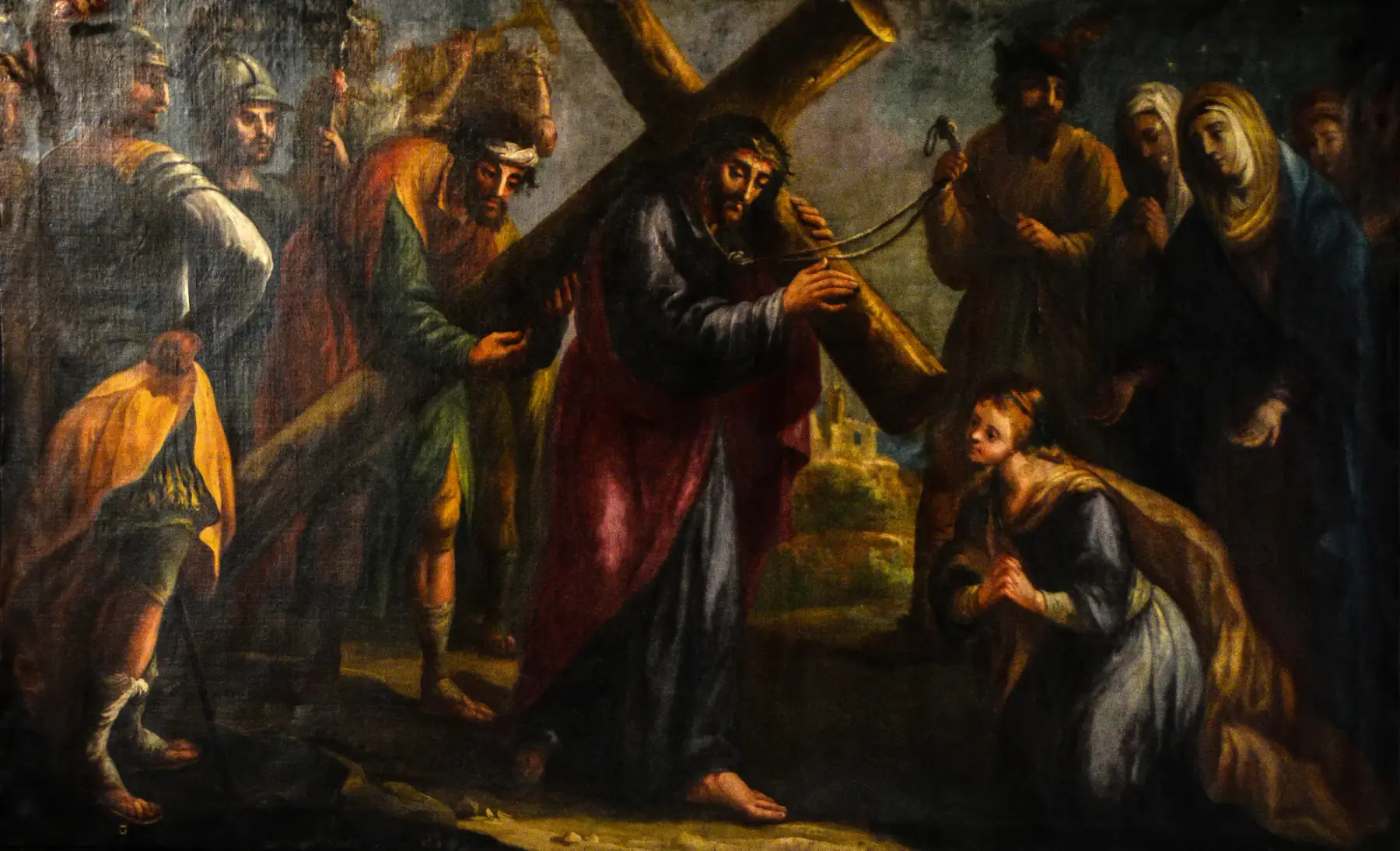
Lienzo 'Jesús camino del Calvario'
Photo: José Rafael Navarro
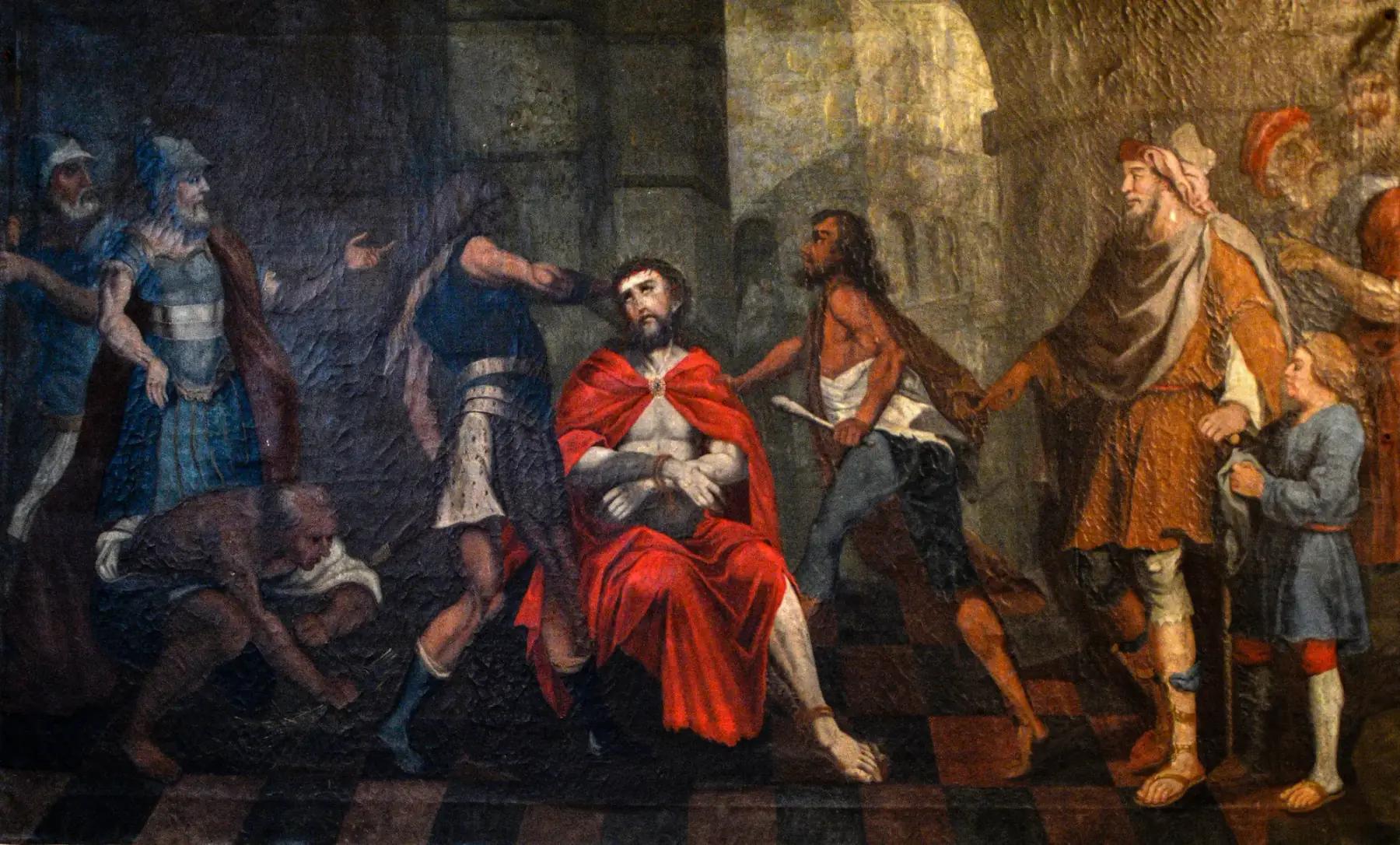
Lienzo 'Coronación de espinas'
Photo: José Rafael Navarro
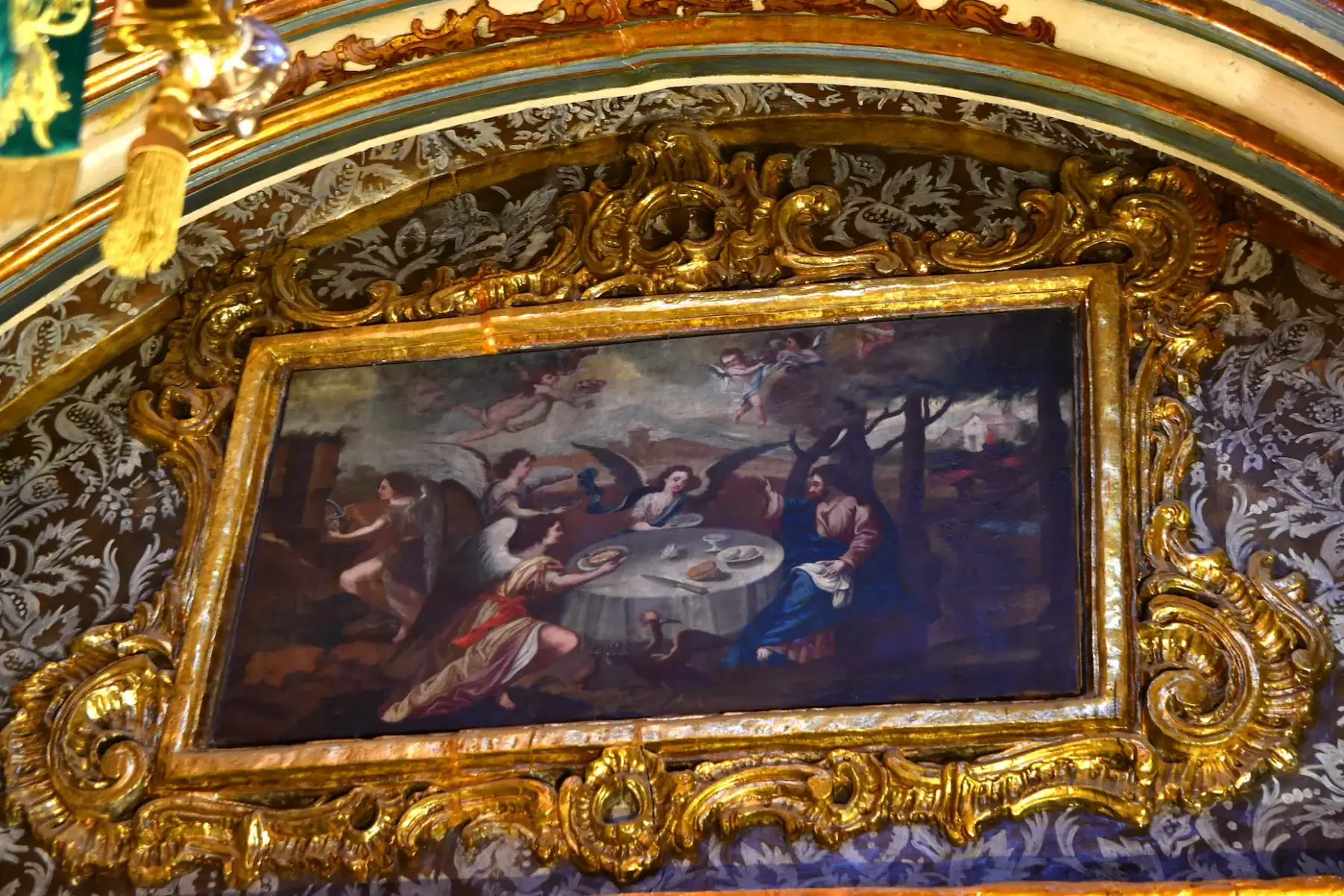
Lienzo 'Tentaciones de Cristo'
Photo: Elena Lisón Sánchez
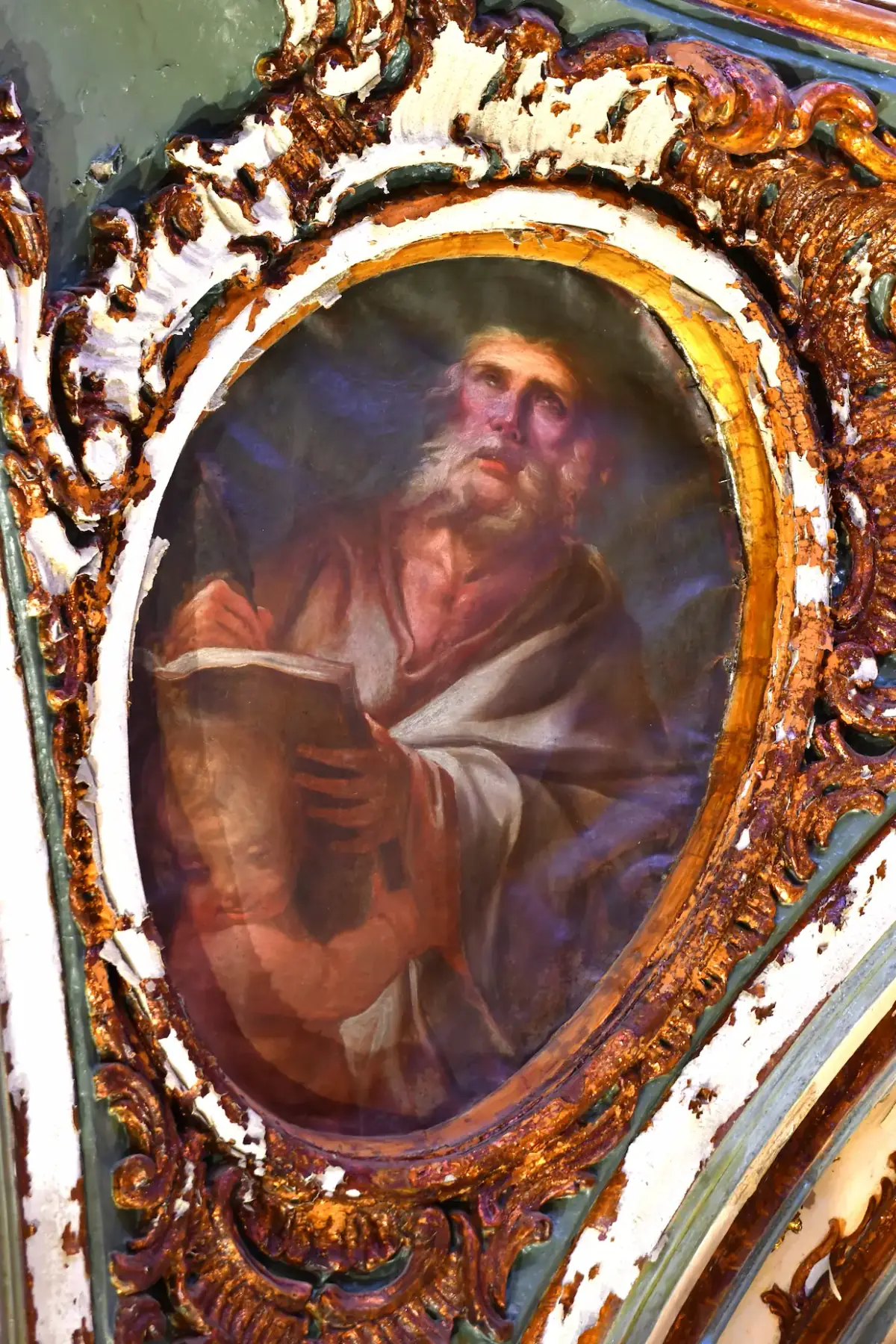
Pechina esquina NO: 'Mateo y el hombre'
Photo: Elena Lisón Sánchez
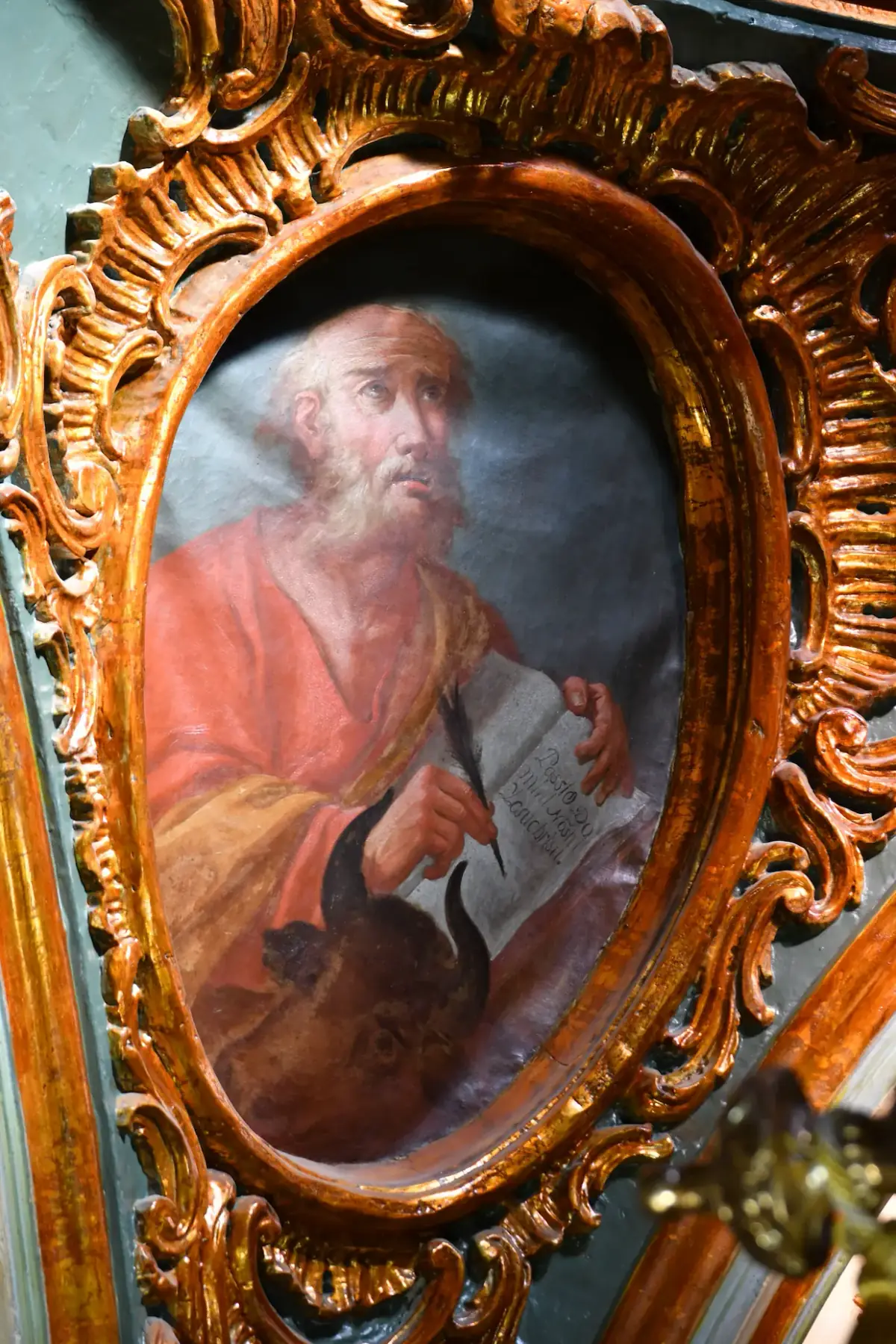
Pechina esquina NE: 'Lucas y el toro/buey'
Photo: Elena Lisón Sánchez
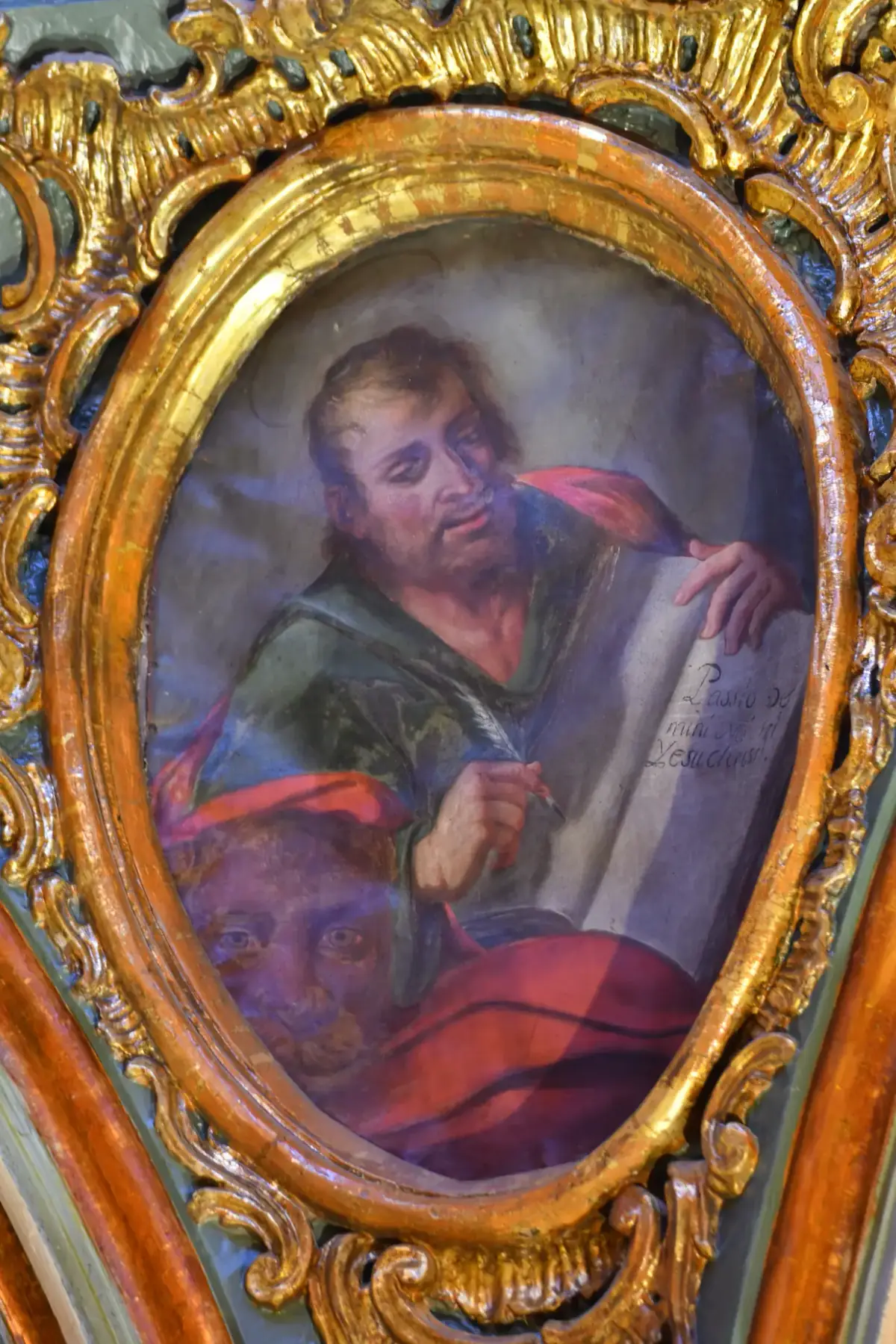
Pechina esquina SO: 'Marcos y el león'
Photo: Elena Lisón Sánchez
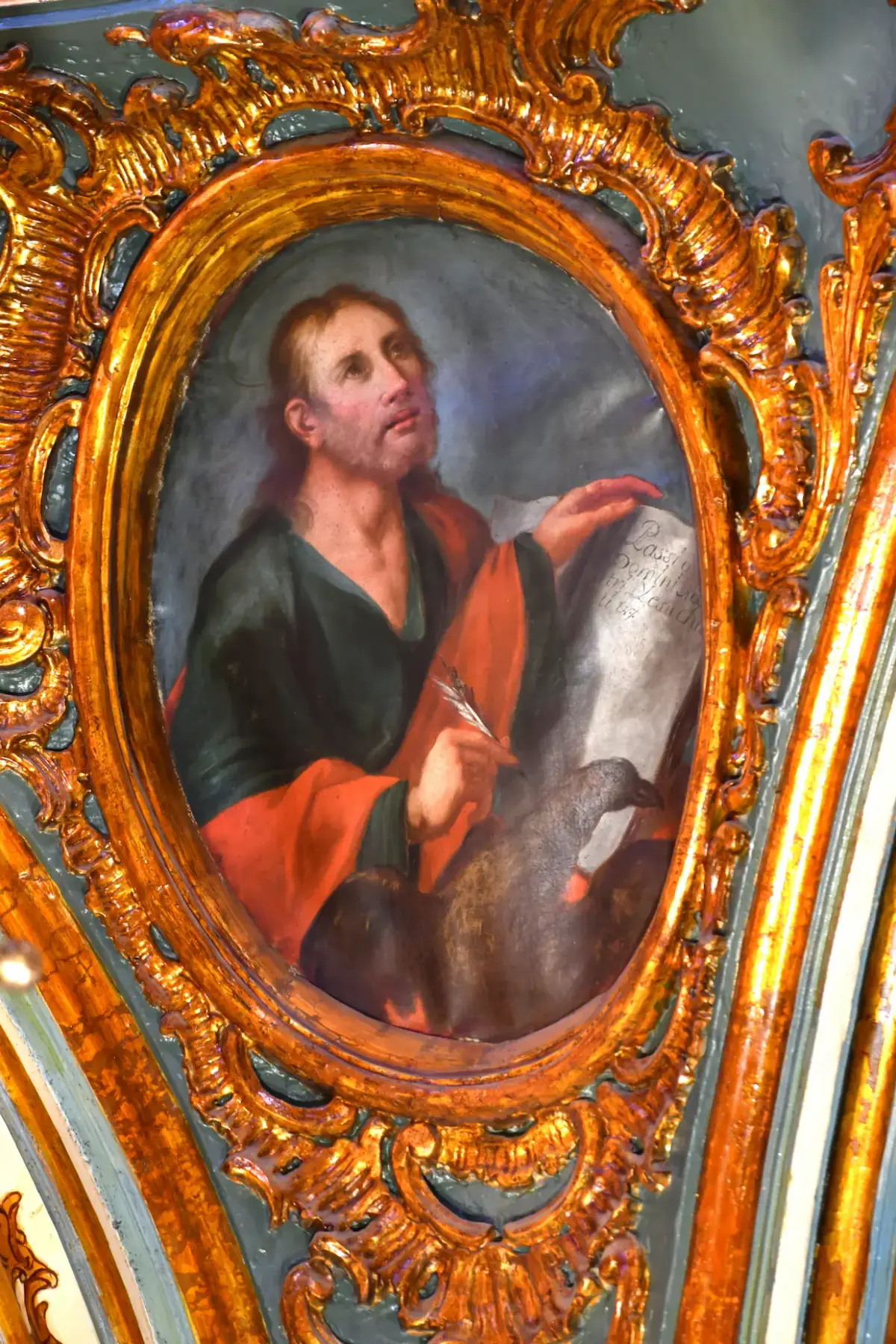
Pechina esquina SE: 'Juan y el águila'
Photo: Elena Lisón Sánchez
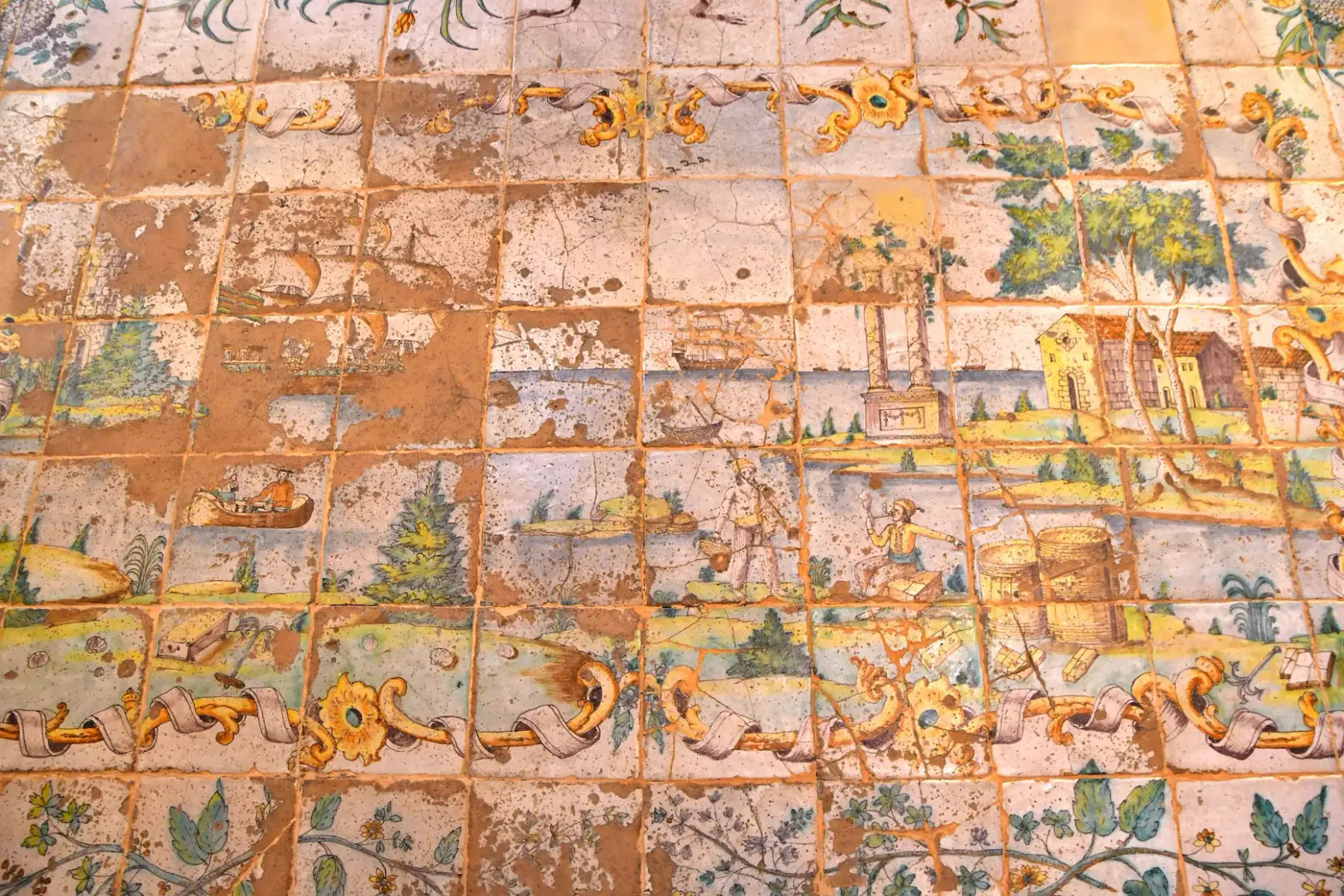
Pavimento del camarín
Photo: Elena Lisón Sánchez
Bibliography
- •El reloj de la Villa. José Rafael Navarro.
- •"La práctica de la restauración (II). El Santuario de la Encarnación de Tobarra. Camarín del Cristo: cúpula". La Tribuna Dominical. María Dolores Barnuevo Cabanillas y Pablo González Cerón.
- •"La práctica de la restauración (III). El Santuario de la Encarnación de Tobarra. Camarín del Cristo: tambor". La Tribuna Dominical. María Dolores Barnuevo Cabanillas y Pablo González Cerón.
- •"Tobarra. Historia de la Villa y su Ermita". Libro de Semana Santa de Tobarra, 1998. Maria Isabel Moreno Gil.
- •"Pavimento del Camarín de la Ermita del Cristo de la Antigua y de la Encarnación". Programa de las Fiestas Patronales, 2012. David Alejandro García Sánchez.