History
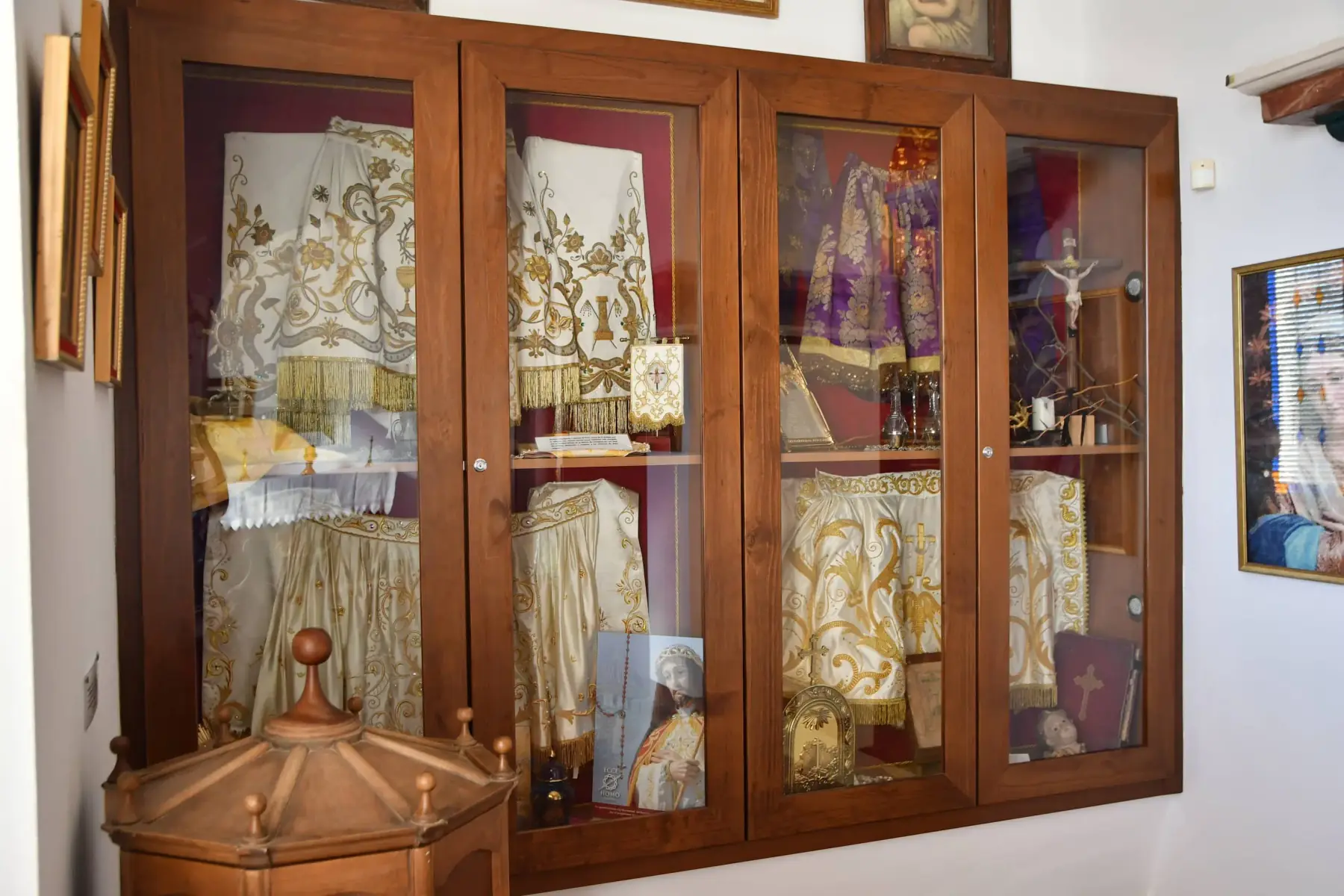
This area, which allows communication between the high altar and the Christ's shrine, was formerly the place where the choir was located during masses. Today it is the space destined for a museum, where, among many other objects, the vestments that the patron of Tobarra has treasured for years are exhibited.
Said vestments consist of two pieces, which always match in design and colour: enagüillas (decorative skirts), to dress the Image; and the sudario (shroud/cloth), which decorates the Cross.
The oldest preserved ones are purple and belonged to the trousseau of the old image, destroyed in 1936. Formerly, two colours were used, white and purple. It is probable that at the time of destruction, it was wearing the white set, hence the purple one was saved, which must have been kept in a private home. Subsequently, the colour green was introduced, thus following the liturgical colours according to the dates of the year.
Other interesting objects in this museum are:
- The prints of the patrons, Cristo de la Antigua and Virgen de la Encarnación, and of the sculptural group of Saint Cajetan with the Virgin and Child, dated 1784
- Different relics of saints and a stone from the Calvary of Jerusalem
- One of the arms of the old Image, destroyed in 1936
- The head of an angel from the old altarpiece, destroyed in 1936
- Photographs of the images prior to the Civil War
- An Italian post-war harmonium
- The medal donated by Sister Rosario García Urrea, which she received from the Navy Military Hospital of Cartagena for her years of work, dedication, and care for the sick of said hospital
- And the standard of the Brotherhood of the Santísimo Cristo de la Antigua and Virgen de la Encarnación.
Images
The restored Mudejar coffered ceiling
Photo: Elena Lisón Sánchez
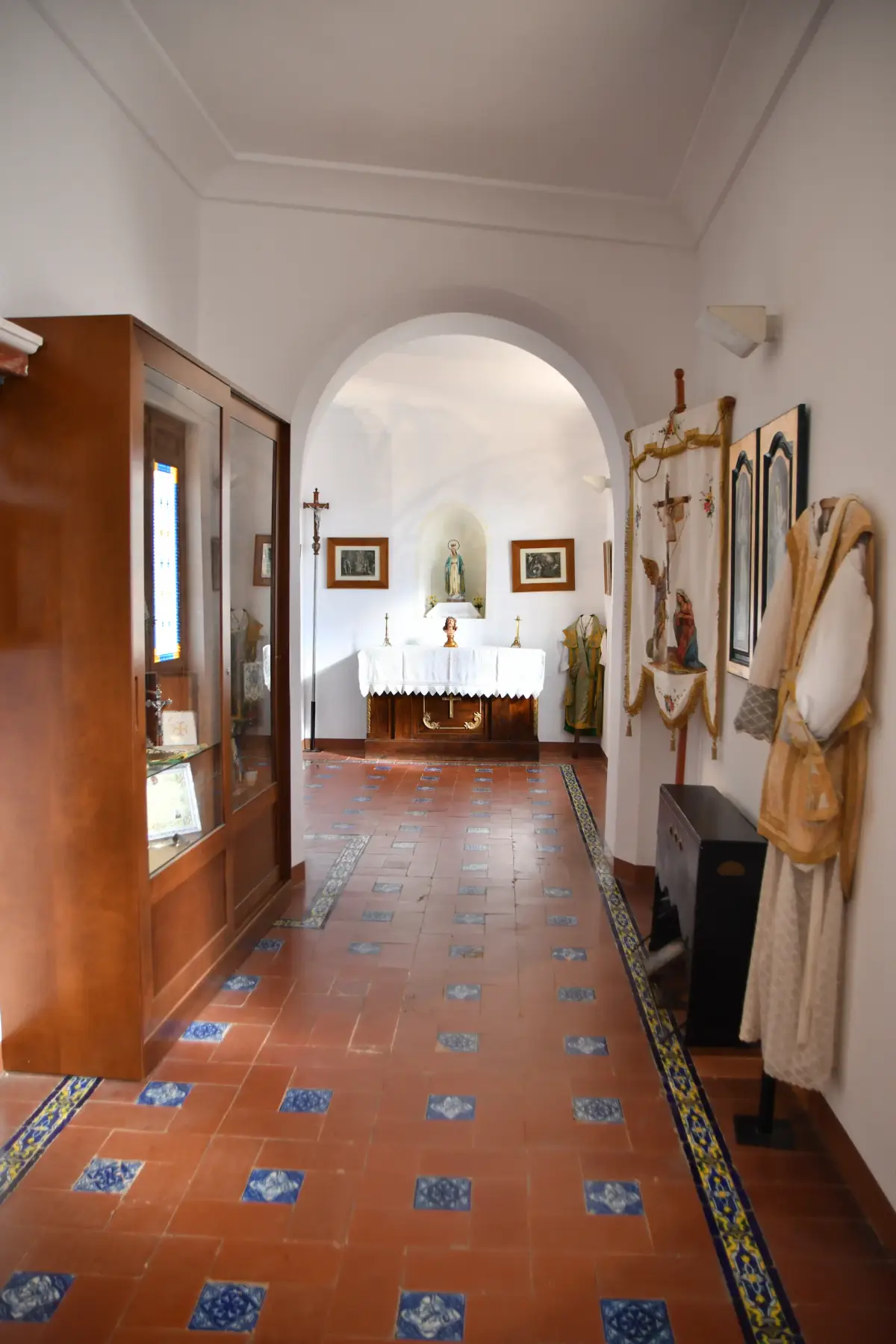
El pasillo
Photo: Elena Lisón Sánchez
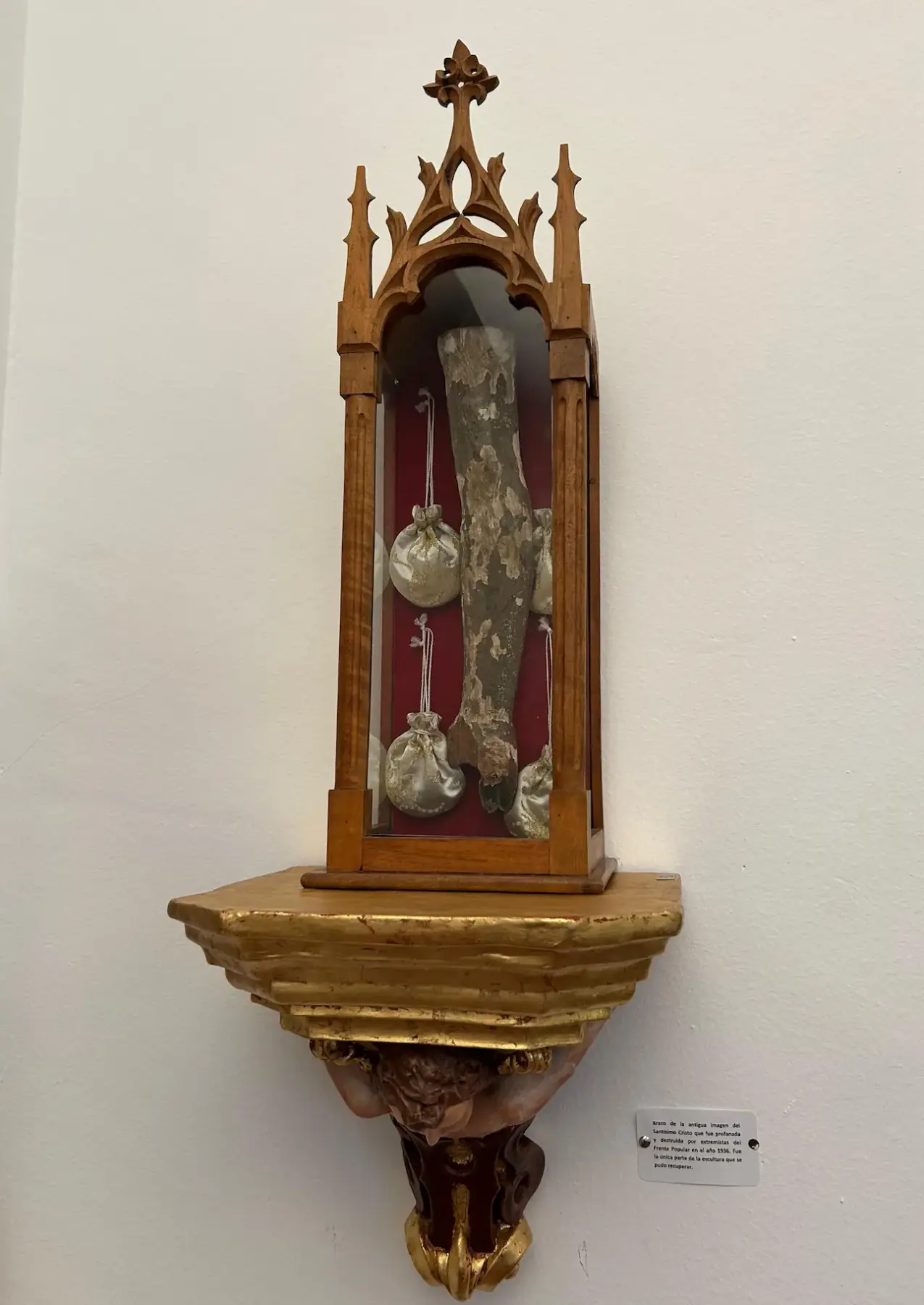
Brazo del Cristo de antes de Guerra
Photo: Román Fibra