History
As we enter the Sanctuary, we find two naves corresponding to successive expansions and restorations of the 17th and 18th centuries. In them, the most prominent feature, from an artistic point of view, is the presence of different images and floats which we are going to comment on:
In the first chapel, upon entering to the left, is situated the grandiose sculptural group of the Fall of Jesus, popularly known as Paso Gordo. It is a work in polychrome wood by Valencian sculptor Roberto Roca, year 1946. The group represents one of the falls of Jesus on the way to Calvary, when he is helped by Simon of Cyrene. It is a copy of the Float of the Fall of Jesus of Murcia, work of the great sculptor Francisco Salzillo. The throne, made in Tobarra, is the work of local artisans José Ochando "Chumillas" and José Martínez Iniesta (Tobarra, 1946). In 1987 a lower platform was added imitating the style of the original throne, being the work of Tobarrans Luis Leal Romero "Mochica" and Fernando Reina Escribano. This float participates in the processions of Maundy Thursday and Good Friday morning. On Maundy Thursday, before the departure of the procession, around 7 in the evening, the transfer of the image to the Church of the Asunción takes place; it is the popular Bajada del Paso Gordo (Descent of the Big Float), one of the most spectacular events of Easter Week in Tobarra, as the agarraores (bearers) of the throne have to overcome the very hard test of lowering it down the steep ramps of the Cuesta de la Encarnación. The entire route is full of thousands of people enjoying such a beautiful spectacle.
In the next chapel is the image of the Risen Christ, from 1944, work of the same sculptor as The Fall. The throne is the work of local artisan Vicente Callado Pérez, year 2022. It participates in the Procession that bears its name on the morning of Easter Sunday, where it is the protagonist of two singular moments: The Greeting with Saint Mary Magdalene, at the start of the procession, and the Encounter with the Virgen de los Dolores, when the parade reaches the Calvary. At the end of this second moment, the act of placing the carnation in the right hand of the Christ is very emotional.
Next, on the north side of this first nave, is the old image of the Virgen de la Soledad (Virgin of Solitude), which was incorporated into the night of Good Friday around 1948. The author is unknown. There exists another image of the Soledad, the new one, in the Church of the Asunción. She is the protagonist, together with the Holy Sepulchre, of the Procession of the Holy Burial, Good Friday night.
Opposite the Paso Gordo we can contemplate the image of the Holy Woman Veronica, by Valencian sculptor José Díes López, year 1944. She participates in the processions: of Maundy Thursday, the two of Good Friday, and Easter Sunday. On Good Friday, at the top of the Calvary, a very emotional act takes place, when a brother of the confraternity replaces the white cloth she carries until that moment with another bearing the face of Jesus, the Holy Face.
In the central nave, on the south side, inside a niche, is the image of the Virgin of Fatima, who participates, accompanying the patrons, in the processions of the Descent (Bajada) and Ascent (Subida) of the Christ in the month of May.
Images
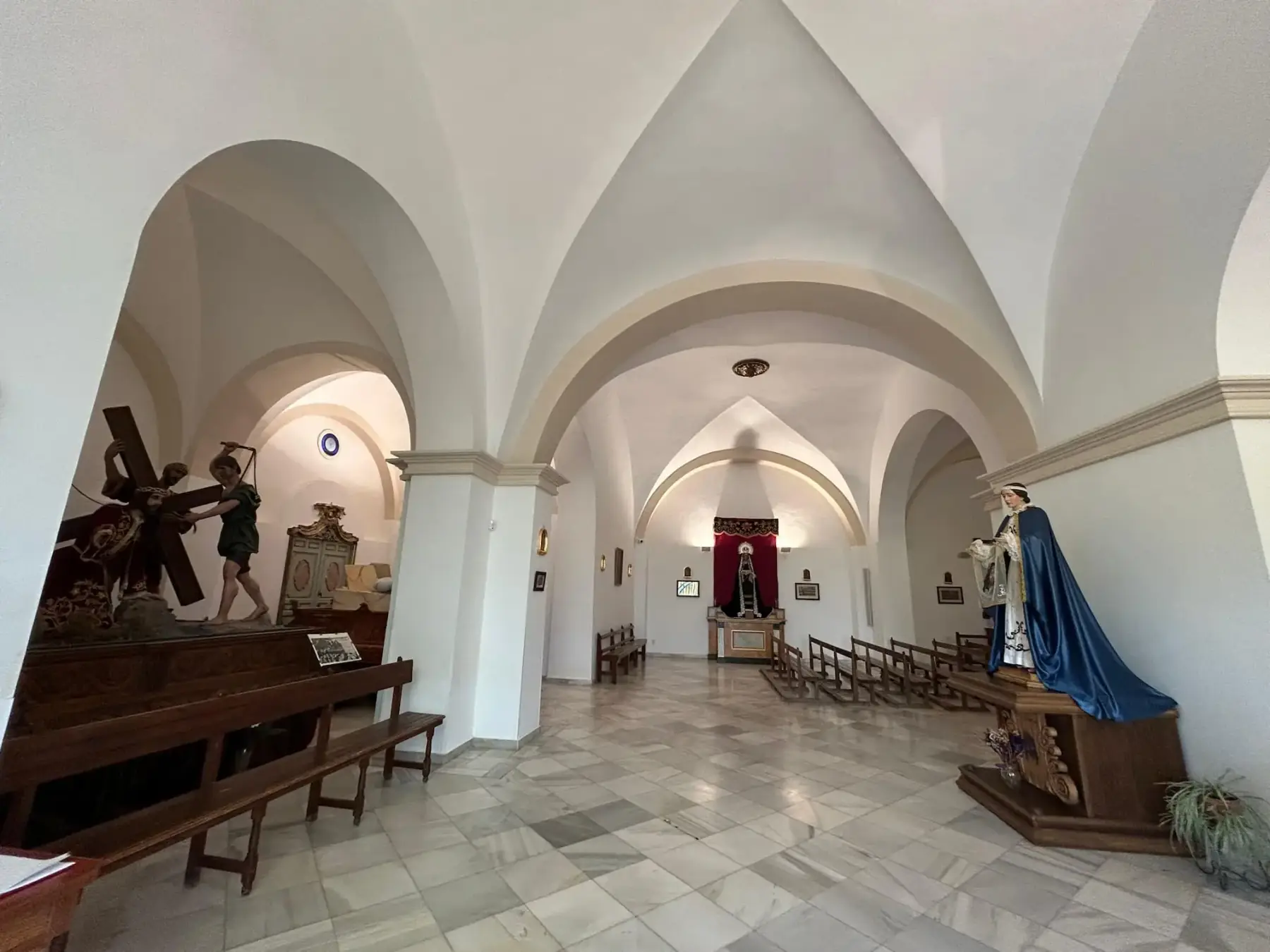
The restored Mudejar coffered ceiling
Photo: Román Fibra
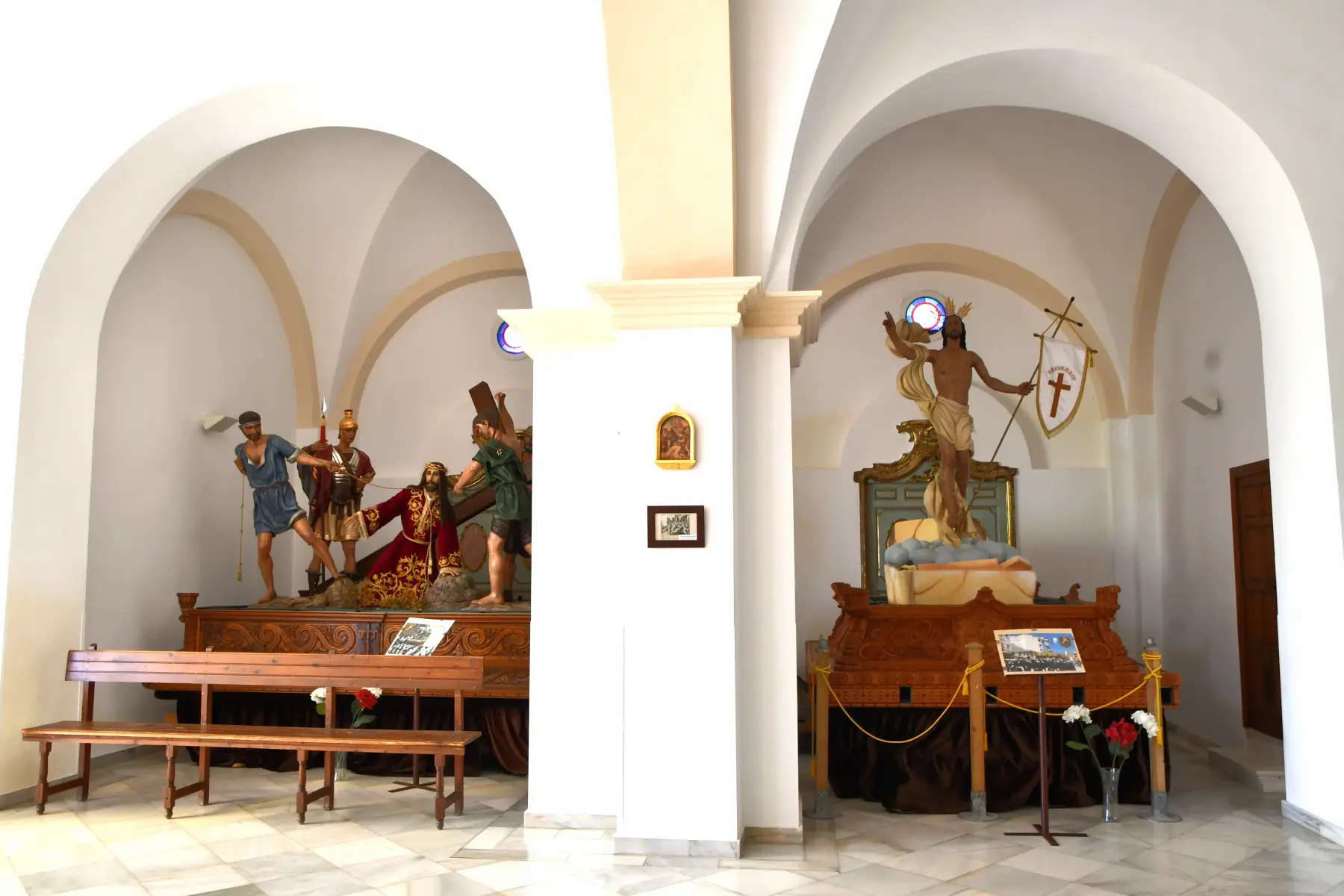
Paso 'La Caída de Jesús' y 'Resucitado' en la primera nave
Photo: Elena Lisón Sánchez
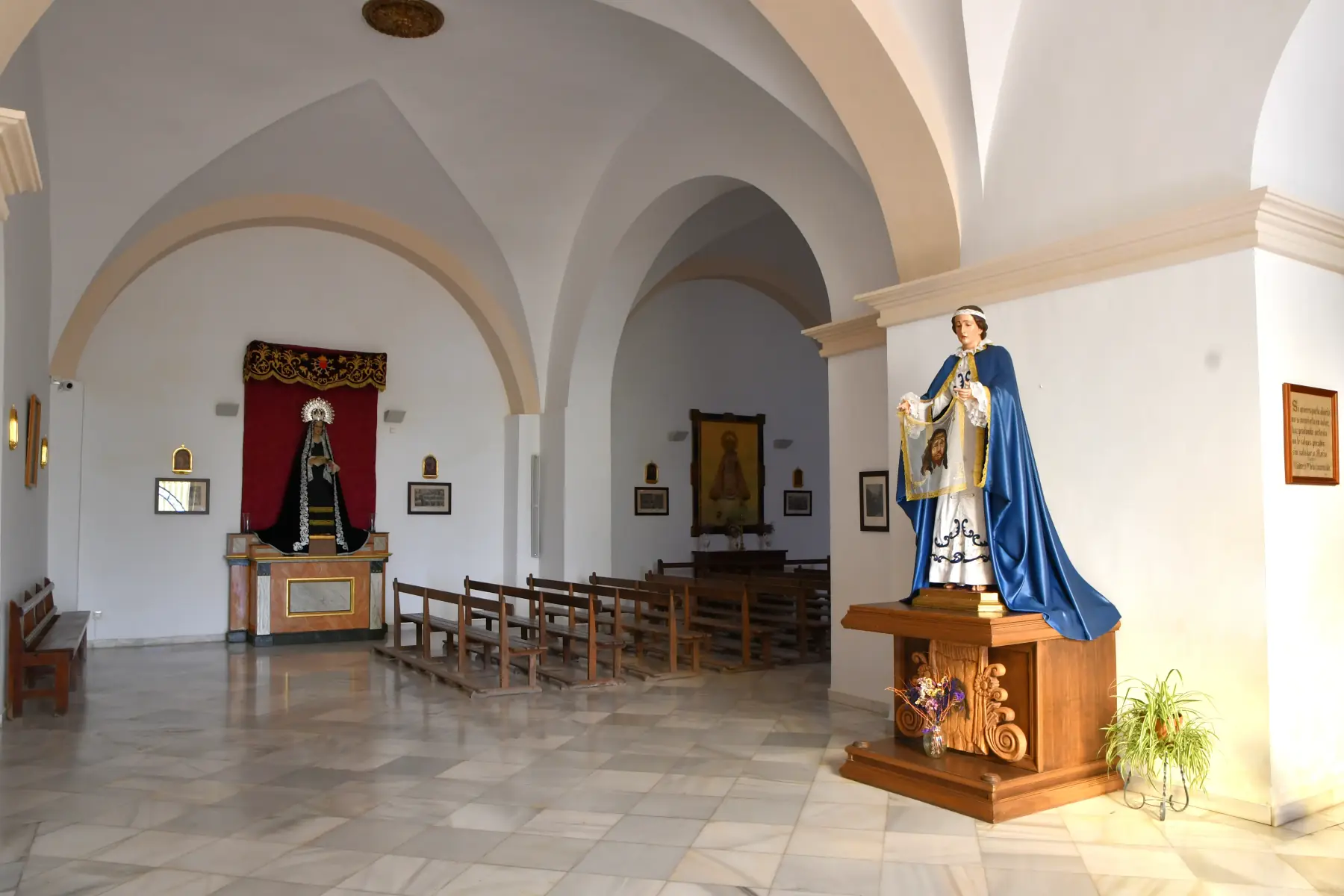
Imagen 'Santa Mujer Verónica' y 'Virgen de la Soledad' en la primera nave
Photo: Elena Lisón Sánchez
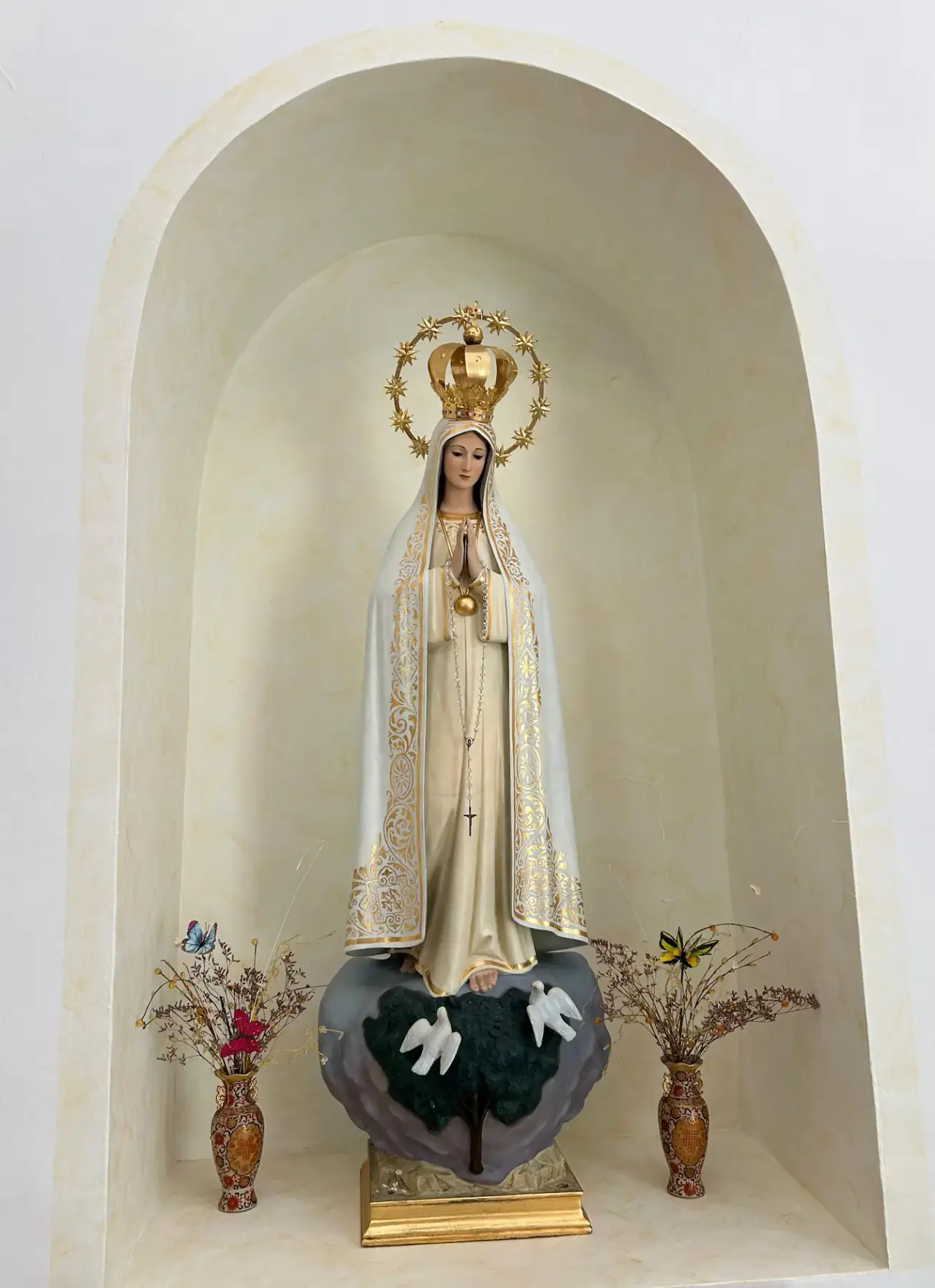
Imagen 'Virgen de Fátima' en la segunda nave
Photo: Román Fibra
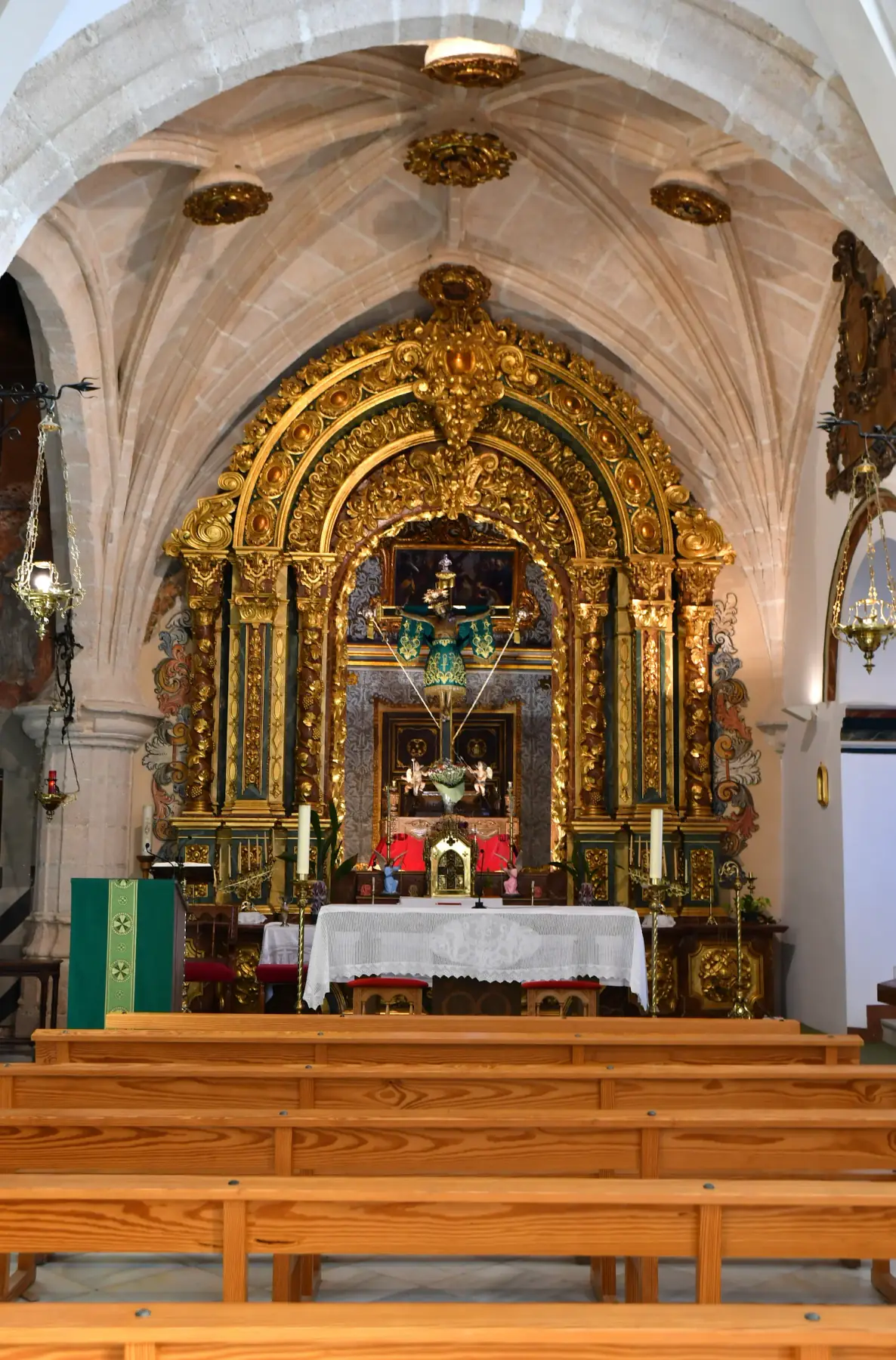
Vista del camarín del Cristo de la Antigua desde la primera y segunda nave
Photo: Elena Lisón Sánchez