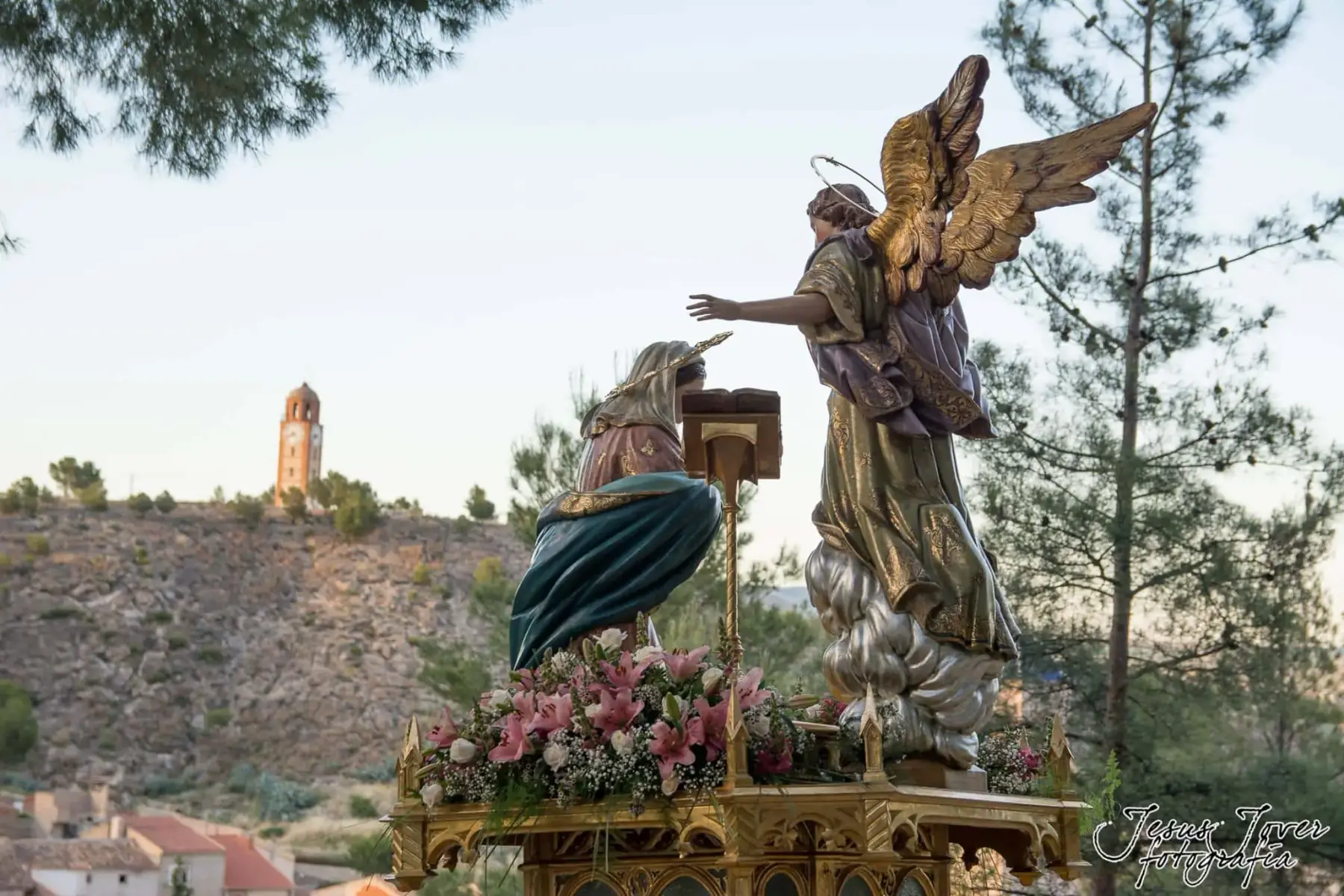
History
The sculptural group of the Virgen de la Encarnación, patron saint of Tobarra, rests on a Neo-Gothic style float (andas), both being the work of Valencian sculptor José Díes López, around 1952. This sculptor is the author of numerous pieces for our town, such as the images of the Christ of the Column, the Holy Woman Veronica, the Immaculate Conception or Saint Cecilia, and the throne of Nuestro Padre Jesús Nazareno. In the upper front part of the throne, the artist's signature (which also appears on the angel's cloud) was recently discovered.
It is a copy of the one destroyed in 1936, which we know from several photographs, and which is cited in the Monumental Catalogue of the Province of Albacete (1912) by Rodrigo Amador de los Ríos: "the float of the Salutation of the Angel to Mary, sculptural group of the 18th century" and its "luxurious litter", subsequently adding in a footnote that:
"On one of the posts or buttresses of the Hermitage, and inside a frame, it is stated that the litter of the Salutation float was carved by master Mariano Garrigós García, who charged 4000 r.s for them in May 1880."
Mariano Garrigós was a sculptor and woodcarver from Murcia, responsible, for example, for the tomb of Bishop Francisco Landeira Sevilla (Chapel of Solitude, Cathedral of Murcia, concluded on September 28, 1879), designed by architect José Ramón Berenguer.
It is a float in Neo-Gothic style, with a predominance of architectural and vegetal motifs. It consists of three well-differentiated octagonal bodies (with smaller sides at the corners):
- The lower and largest body, under which the three carrying poles are placed for procession (in the 1880 version they passed through it), decorated with a pierced pattern of quatrefoils, crowned by a succession of points topped by leaves, and with pinnacles at the corners, with foliage on their spires and topped with a flower.
- The central, the narrowest body of the three, but also the tallest, decorated with two arches on the fronts and one on the corners, each framing a total of twelve elements of Marian symbolism from the litanies:
- The Cypress: for many peoples a sacred tree. Due to its longevity and persistent greenery, it is called the "tree of life".
- The Rose: "...like a rose plant in Jericho" (Sirach 24:14). Considered the queen of flowers, it is a symbol of charity because this is the queen of virtues.
- The Tower: The invocation of Mary as the Tower of David alludes to her spiritual beauty, her firmness in faith, and her dignity as Mother of the Messiah.
- The Palm Tree: cited in Ecclesiasticus 24:14, along with other varieties of trees, as praise of Wisdom: "I was exalted like a cedar in Libanus, and as a cypress tree on mount Zion. I was exalted like a palm tree in Cades, and as a rose plant in Jericho..." The liturgy applies this passage to the Virgin Mary and thus we find the palm tree in the iconographic repertoire surrounding the Immaculate Conception.
- The Well of Living Waters: symbol of abundance and the source of life. Mary would be that well, in the sense that she contained within her womb the true water that gives life.
- Lilies: Both lilies and white lilies signify her virginal being and her conception without the stain of sin.
- The Tree: "And there shall come forth a rod out of the stem of Jesse, and a Branch shall grow out of his roots" (Is. 11:1).
- Anagram: means Ave Maria.
- Closed Gate: In the prophet Ezekiel (Ez. 44:1) we find the reference to the "shut gate of the temple", which was interpreted as a symbol of Mary's virginal maternity.
- The Sun: Traditionally applied to classical gods like Apollo, subsequently it was a symbol of God the Father and Christ. It is a representation of Justice, of what illuminates us after death, of intellect, strength, power, the beginning and origin of everything. In Mary, this image of the sun is merely derivative. The true sun is her Son. She is so in the sense that, through her virtues, she radiates light like the solar star.
- Enclosed Garden: a symbol of Mary's virginity.
- Fountain: This symbol applied to Mary is interpreted as a vivifying and purifying element. Water is mother and matrix in the Jewish tradition, the origin of creation. Similarly, the Virgin is the source of a new life: from her divine maternity, true life has sprung for humanity: Jesus Christ.
- The upper body of the float is wider than the preceding one, but less so than the lower one, in addition to being less decorated than the previous ones, except for the pinnacles at its corners, without foliage on the spire and topped with a flower. Above are located the images of the Archangel Gabriel and the Virgin, between which there is a pedestal decorated with quatrefoils on which stands a lectern with a book that reads: "Hail Mary. Full of Grace. The Lord is with Thee. Behold the handmaid of the Lord. Be it done unto me according to Thy Word."
Images
The restored Mudejar coffered ceiling
Photo: Jesús Jover Alfaro
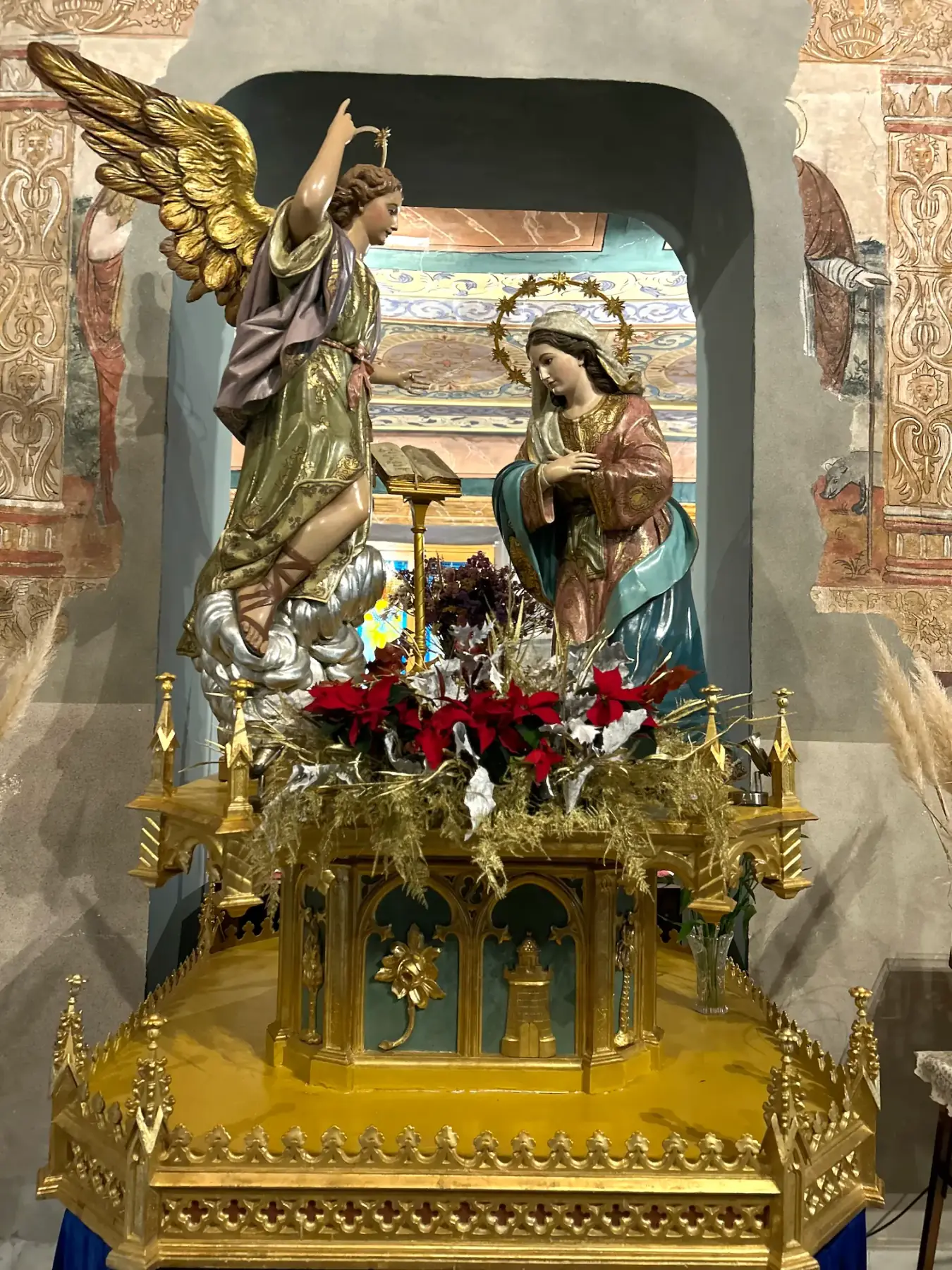
Paso de la Virgen de la Encarnación
Photo: Román Fibra
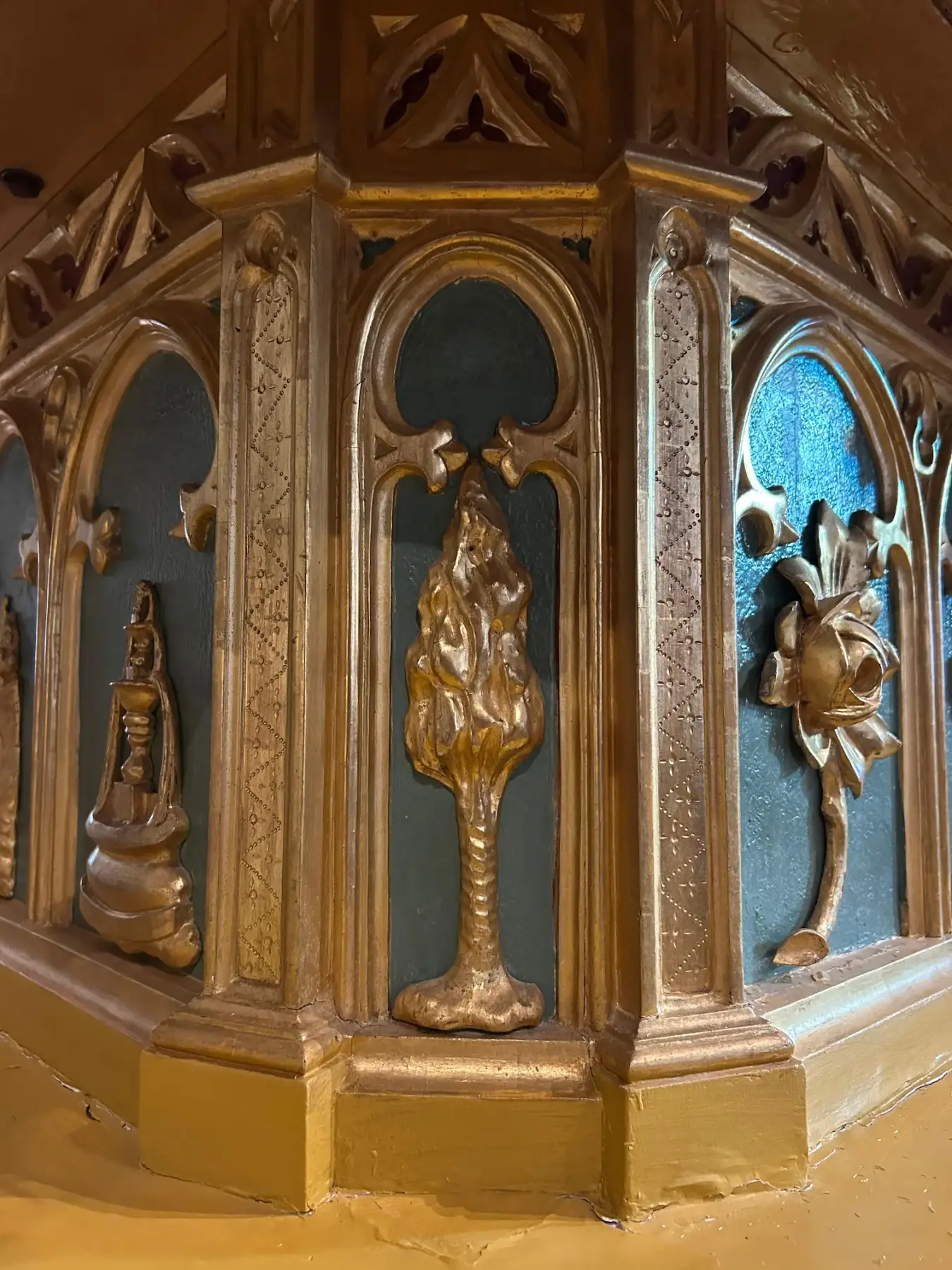
Símbolo 'Ciprés' en el trono
Photo: Román Fibra
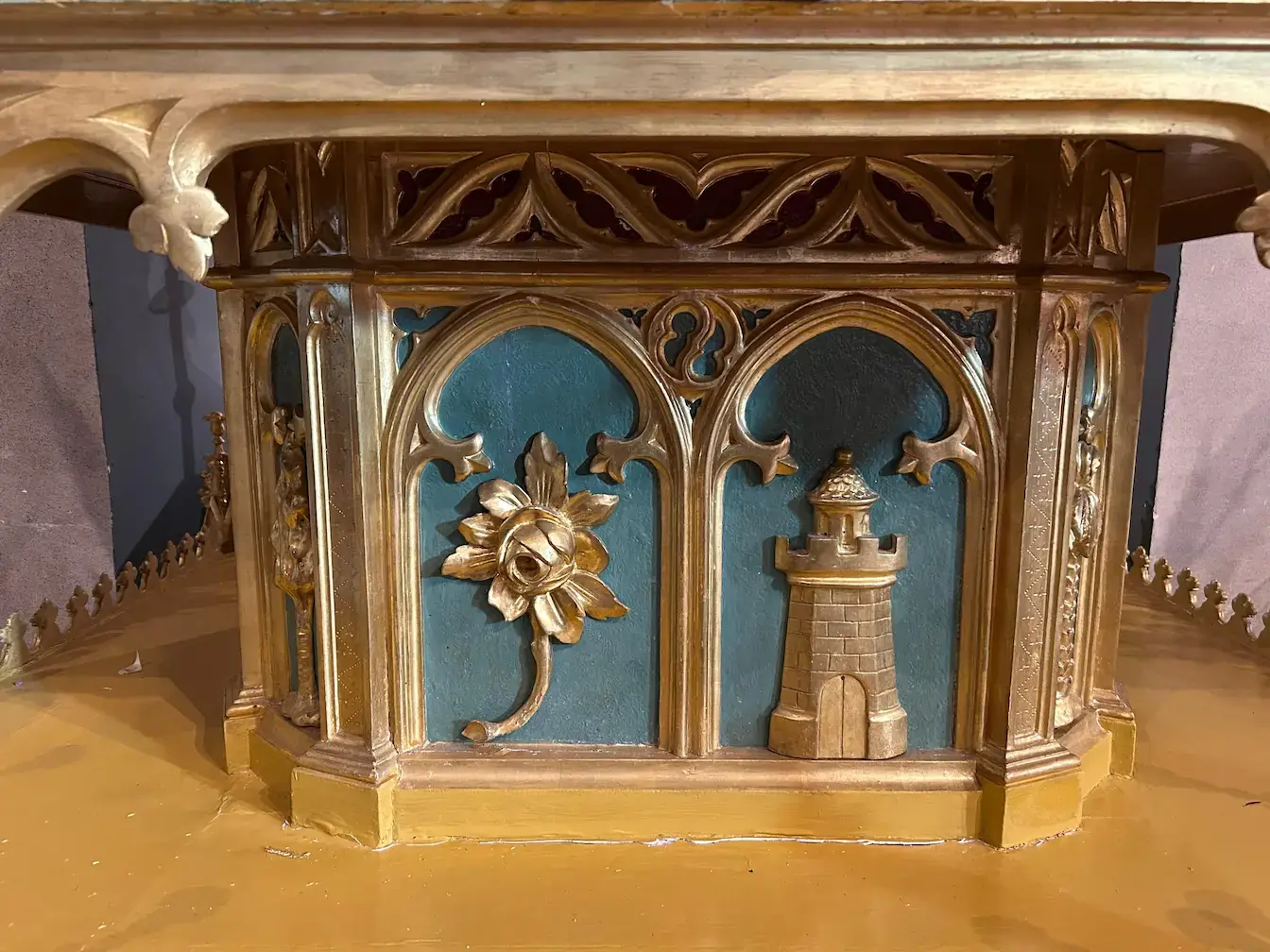
Símbolos 'La rosa' y 'La torre' en el trono
Photo: Román Fibra
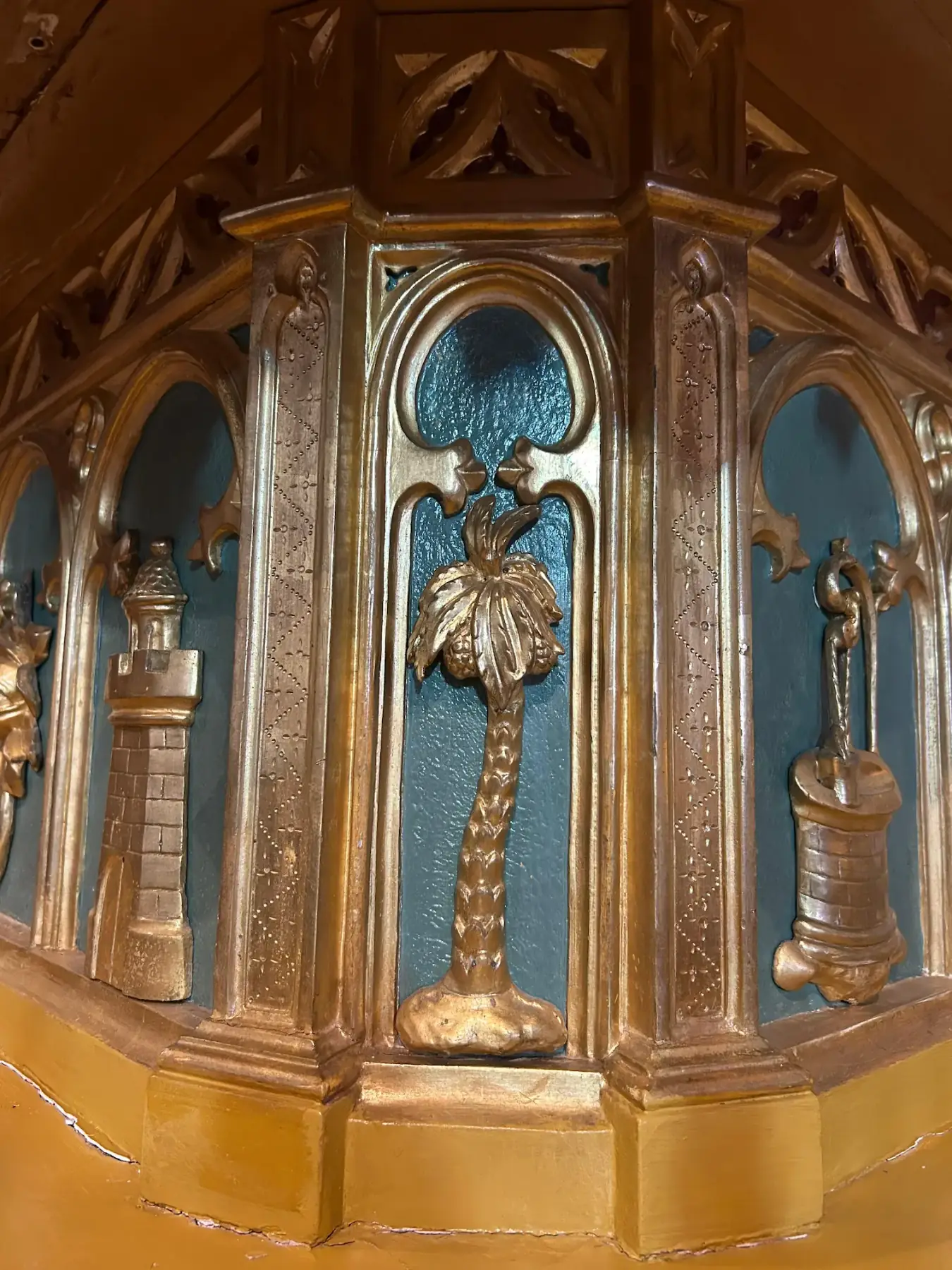
Símbolo 'La palmera' en el trono
Photo: Román Fibra
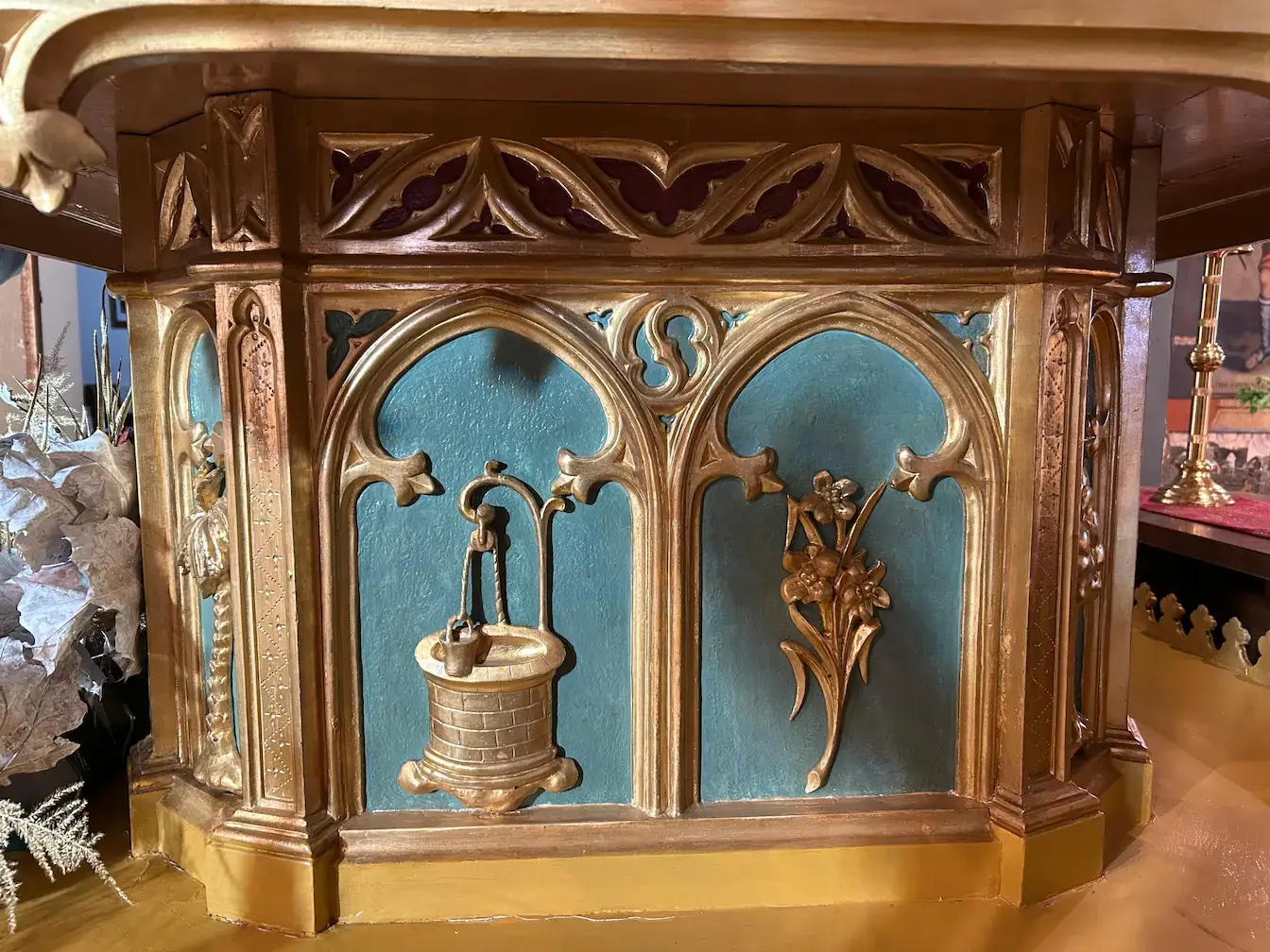
Símbolos 'El pozo de aguas vivas' y 'Lirios' en el trono
Photo: Román Fibra
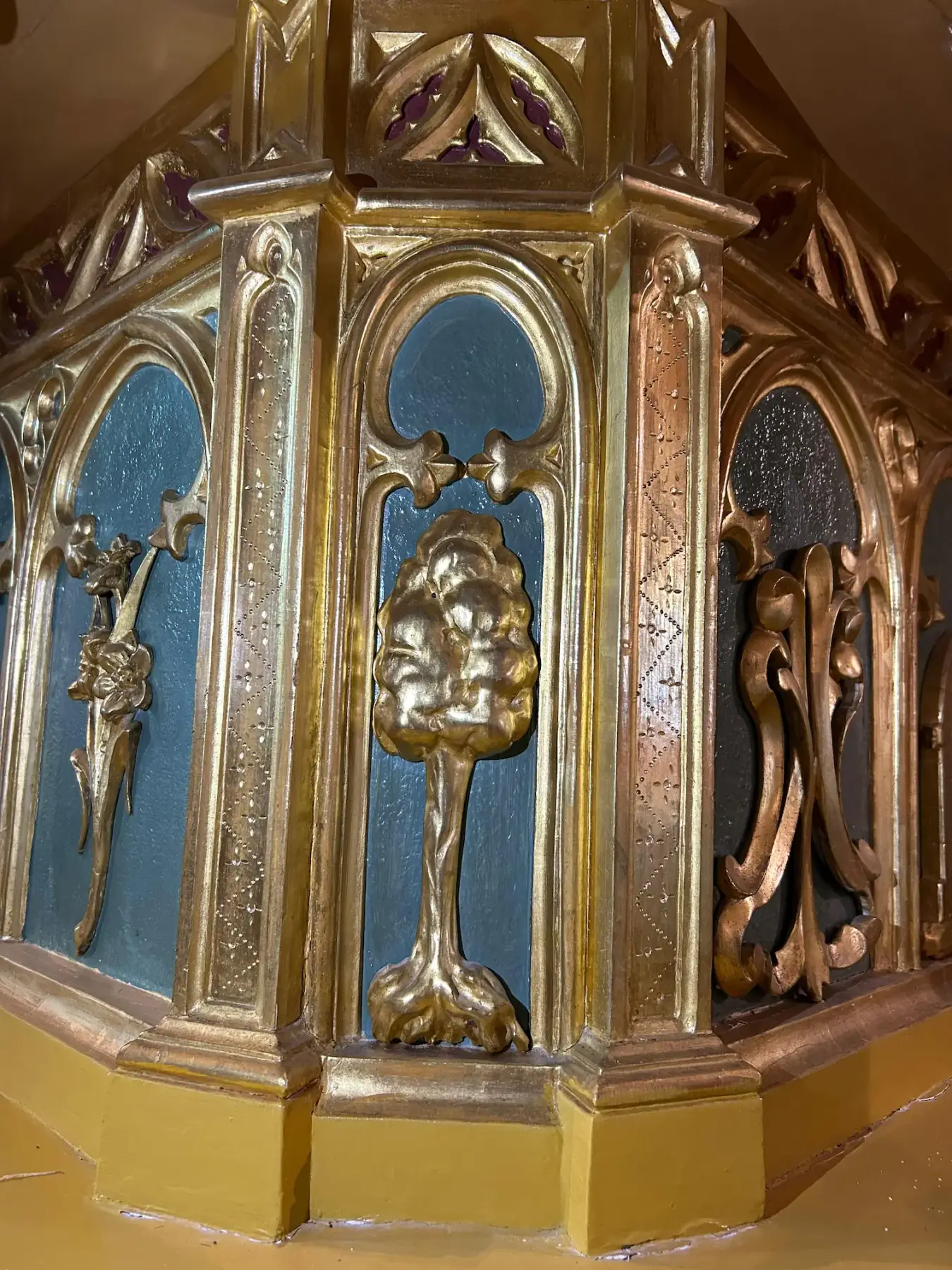
Símbolos 'El árbol' en el trono
Photo: Román Fibra
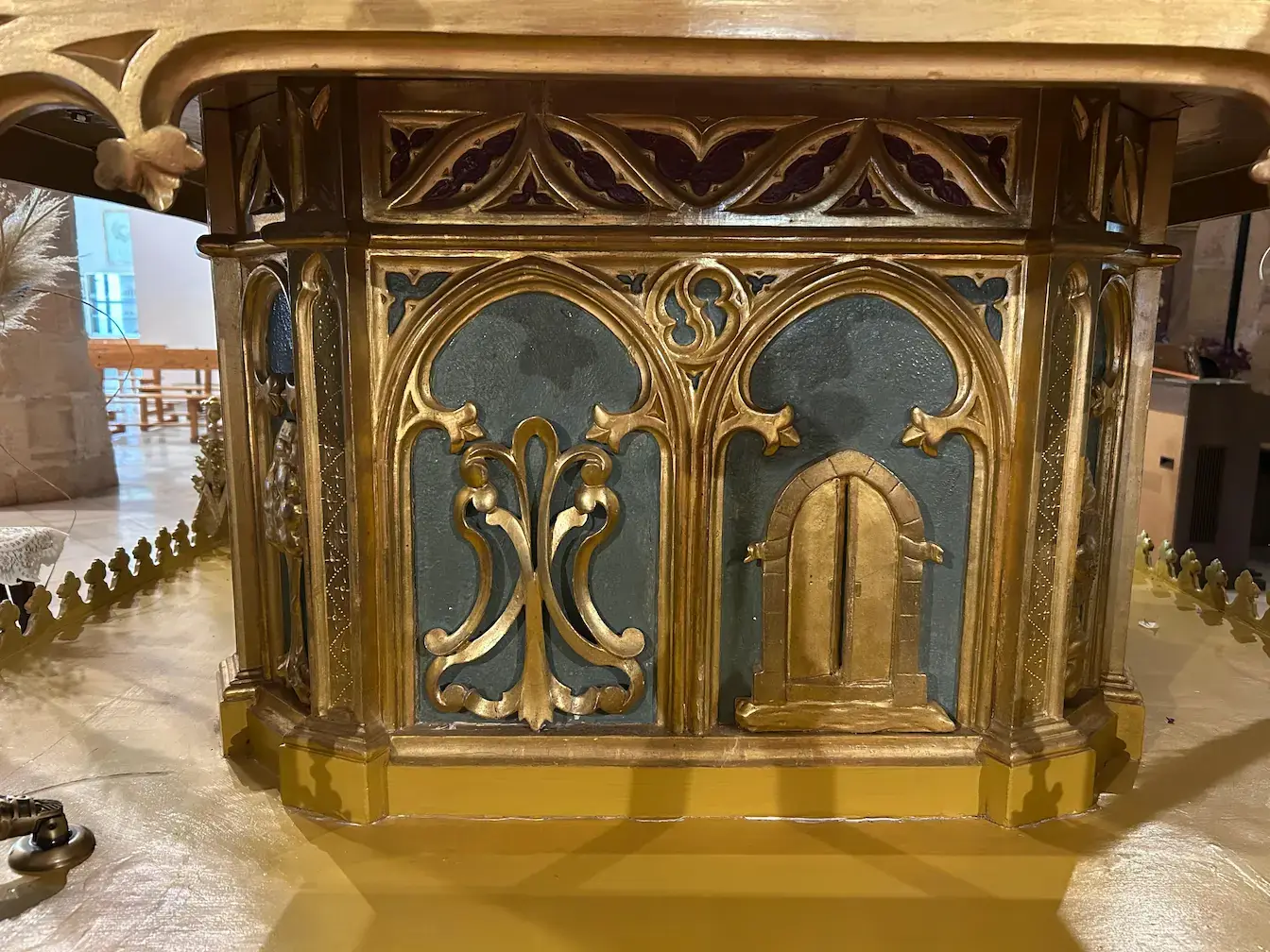
Símbolos 'Anagrama' y 'La puerta cerrada' en el trono
Photo: Román Fibra
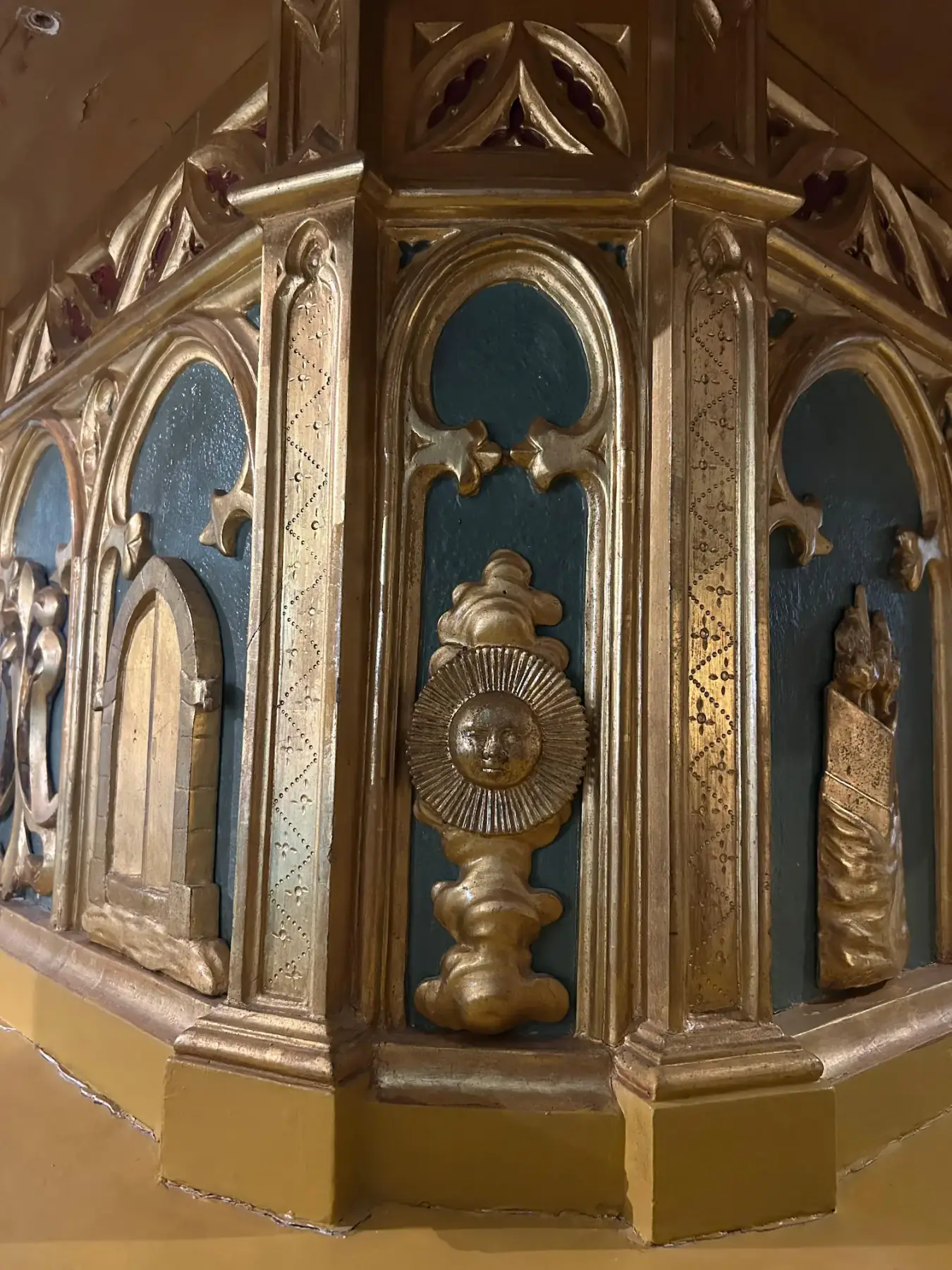
Símbolo 'El Sol' en el trono
Photo: Román Fibra
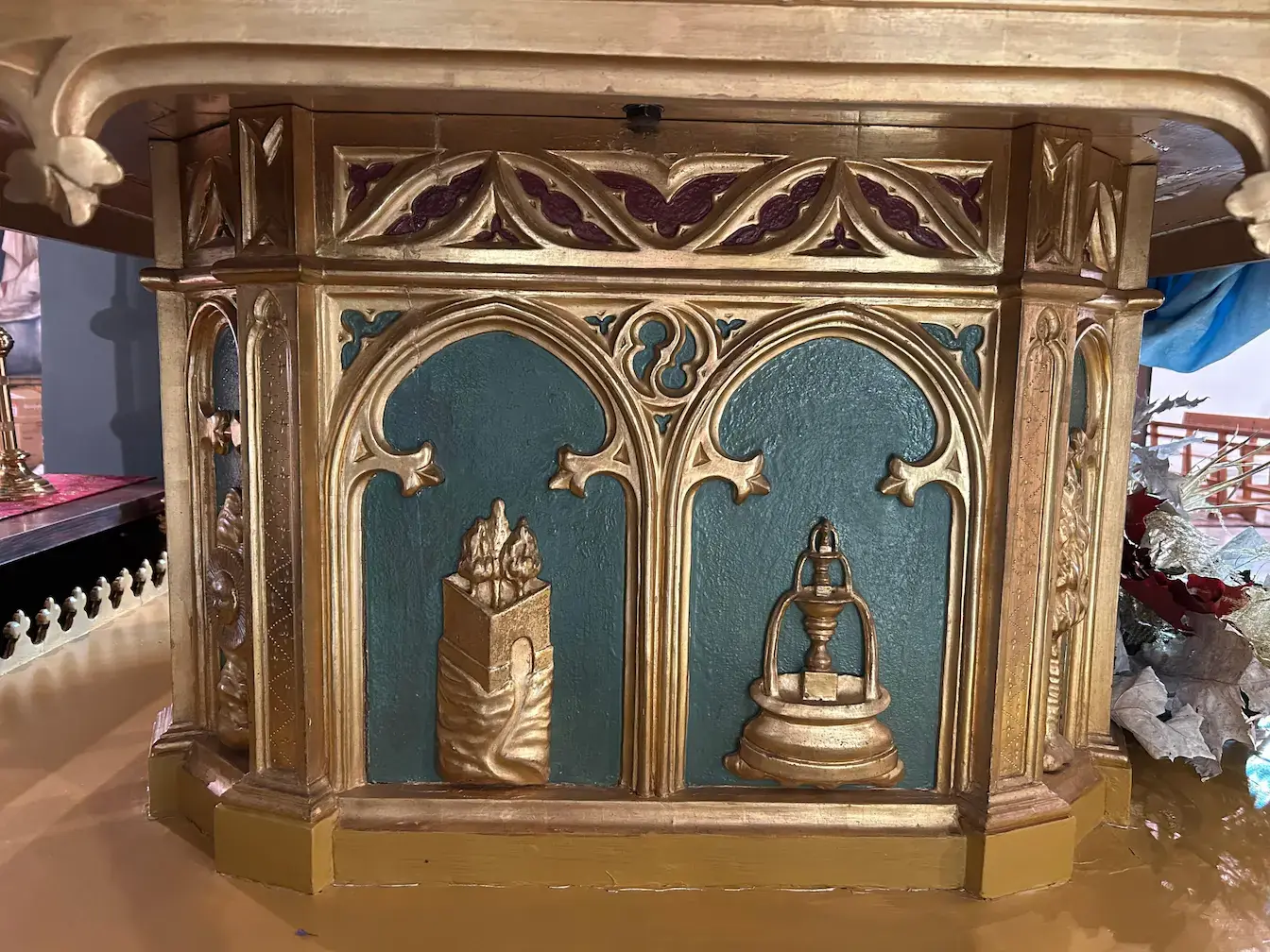
Símbolos 'Huerto cerrado' y 'Fuente' en el trono
Photo: Román Fibra